
How to Bring the Outdoors Into Your Office Without Sacrificing Brand Polish
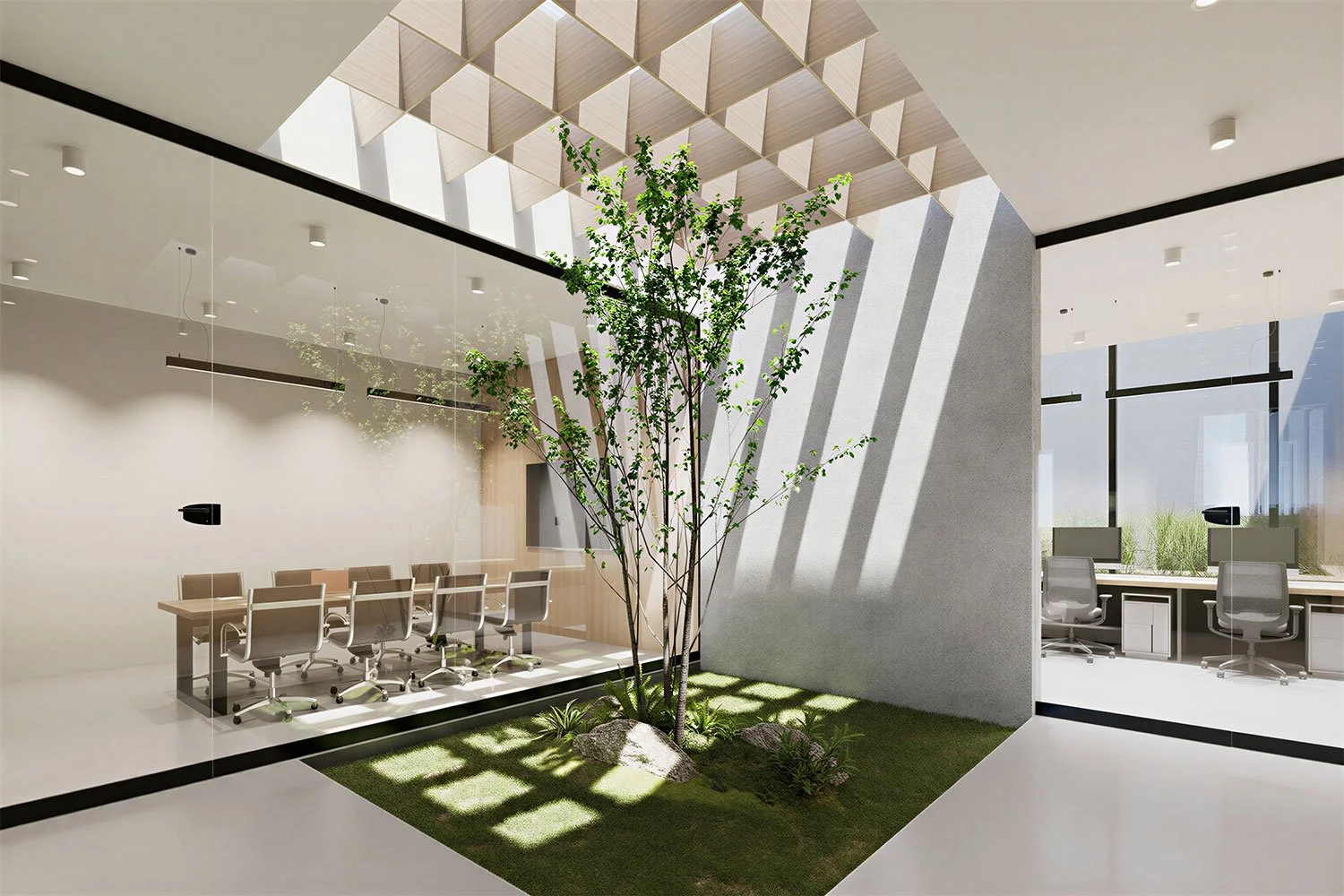
When designing a commercial workspace, we always begin with one deceptively simple question:
How do we bring the outdoors in—while preserving the polish and performance of a branded, high-functioning office?
This isn’t just a stylistic preference. It’s a strategy. As commercial interior designers, we’ve watched the modern workplace shift dramatically over the past decade. Business owners are no longer satisfied with “nice-looking” offices. They want spaces that enhance productivity, improve employee well-being, reinforce brand identity, and create a visitor experience that reflects their commercial credibility.
And increasingly, one principle sits at the center of these goals:
Nature.
Whether you call it biophilic design, nature-integrated interiors, sustainable workspace planning, or organic modern office design, commercial leaders are searching for ways to merge the calming energy of the outdoors with the sophistication of a high-performance workplace.
This blog breaks down exactly how we do that at Maybeck Design—and how you can do it in your office, too.
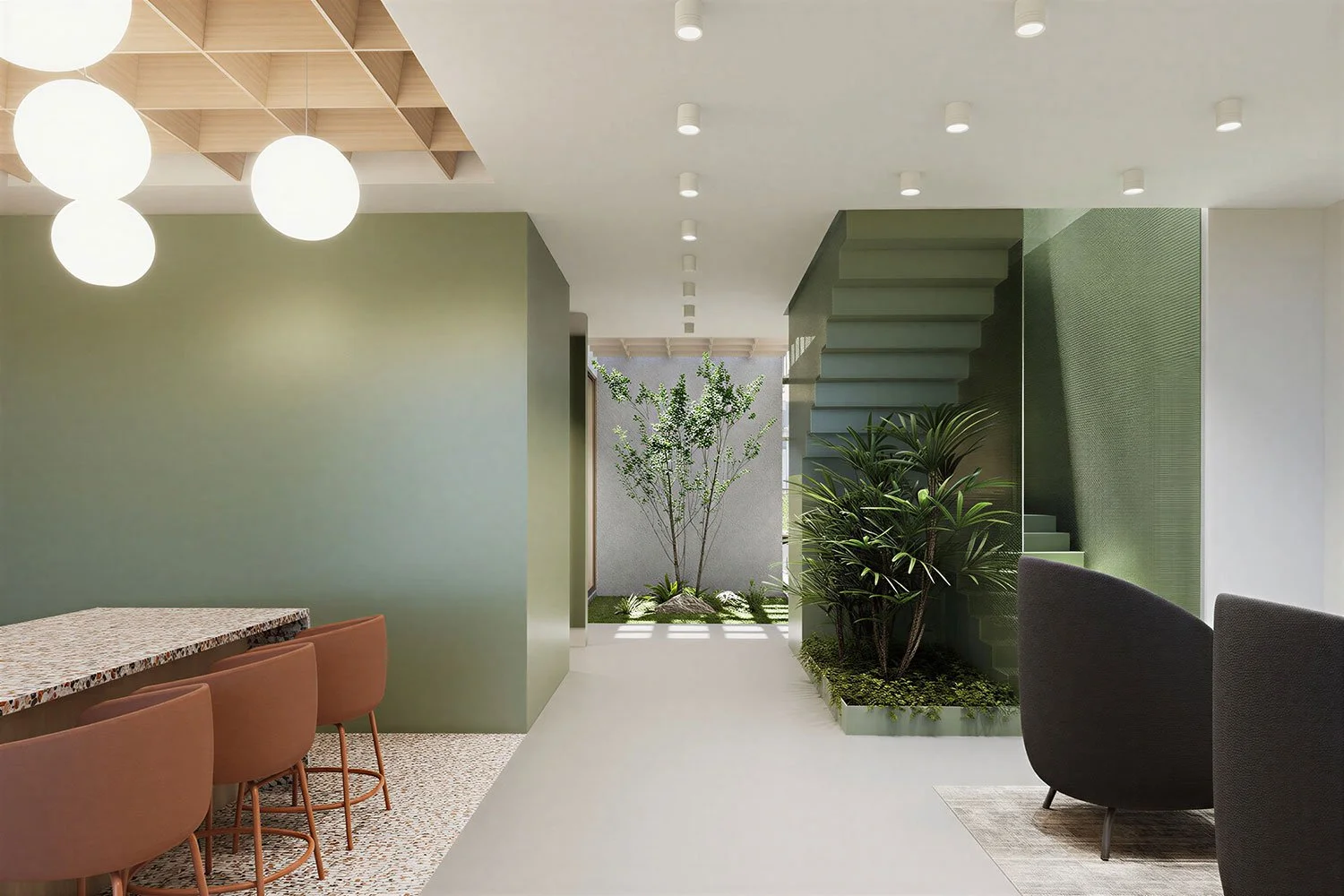
Why Commercial Offices Are Turning to Biophilic Design
In 2025, the search volume for “biophilic office design,” “office plants trend,” and “natural workspace design” continues to rise. This isn’t a fad. It’s a response to a workplace reality:
People feel better in environments that feel natural. And when people feel better, they perform better.
Benefits business owners care about:
Improved employee focus and cognitive performance
Studies consistently link natural materials, greenery, and daylight to higher concentration levels.Increased productivity and reduced absenteeism
Offices that integrate nature see measurable improvements in well-being and stress reduction.Stronger brand differentiation
A nature-forward workspace stands out dramatically in competitive industries.Better client experience
There's an immediate psychological effect when someone walks into a warm, textured, plant-rich environment versus a stark corporate box.Higher talent retention
Younger generations in particular value workplaces that promote mental health and sustainable practices.
But achieving this balance—nature + polish—requires intentional design.
That’s why our first question sets the tone for the whole project:
How can we bring the outdoors in without losing the brand’s aesthetic precision, professionalism, and operational efficiency?
Let’s dive into how that works.
1. Start With Your Brand Identity—Not the Plants
Many business owners assume biophilic design means one thing: “add greenery.”
But greenery without intention leads to unfocused, cluttered, or mismatched interiors.
At May Beck Design, we don’t choose a single plant until we understand:
Your brand’s visual identity
Your company’s culture and workflow
How clients and employees move through your space
The desired emotional experience
Your maintenance capacity and building conditions
Only then can we determine whether your environment calls for:
Sculptural potted trees
Organic live-edge wood accents
Matte stone surfaces
Softened natural lighting
Earth-toned textiles
Moss walls
Planters that integrate into millwork, rather than compete with it
Or a combination of several elements
Your brand’s personality dictates the design direction.
Think of nature as an ingredient—not the recipe.
2. Use Natural Materials to Anchor the Space
When commercial clients search phrases like:
“modern office with natural materials"
“wood accents in corporate design”
“organic modern workspace ideas”
…it’s because they want more texture, warmth, and sensory depth—but without compromising sophistication.
Materials we love for polished, nature-integrated commercial environments:
White oak and walnut (in millwork, desks, wall coverings)
Real stone (quartzite, limestone, textured tile)
Neutral clay plasters (non-glossy and ultra-luxurious)
Natural fiber textiles (linen blends, wool, bouclé, jute)
Architectural metals in warm tones (brushed bronze, muted golds, patinated blackened steel)
Reeded wood or slat partitions (soften acoustics and light)
Why this matters:
Materials do more than add beauty—they create mood. Natural surfaces subtly remind the brain of the outdoors, even without visible greenery.
Every time we elevate a workspace with organic finishes, the vibe transforms: calmer, more grounded, more human.
3. Incorporate Biophilic Elements That Don’t Feel Theme-Driven
Nature shouldn’t feel gimmicky.
While live plants are powerful tools, the “jungle office” aesthetic isn’t right for every brand—especially corporate, financial, legal, or tech clients who need control and clarity in their visual identity.
To avoid over-theming, we integrate natural elements subtly and architecturally.
Examples of sophisticated biophilic additions:
Planters built into reception millwork
Wall-mounted greenery that mirrors the brand palette
Dried botanicals in muted tones (low maintenance!)
Sculptural branches instead of floral arrangements
Potted trees that create height and drama without clutter
Stone-wrapped columns
Natural wood ceiling details to soften acoustics
The goal is to make nature feel like part of the architecture—not an accessory.
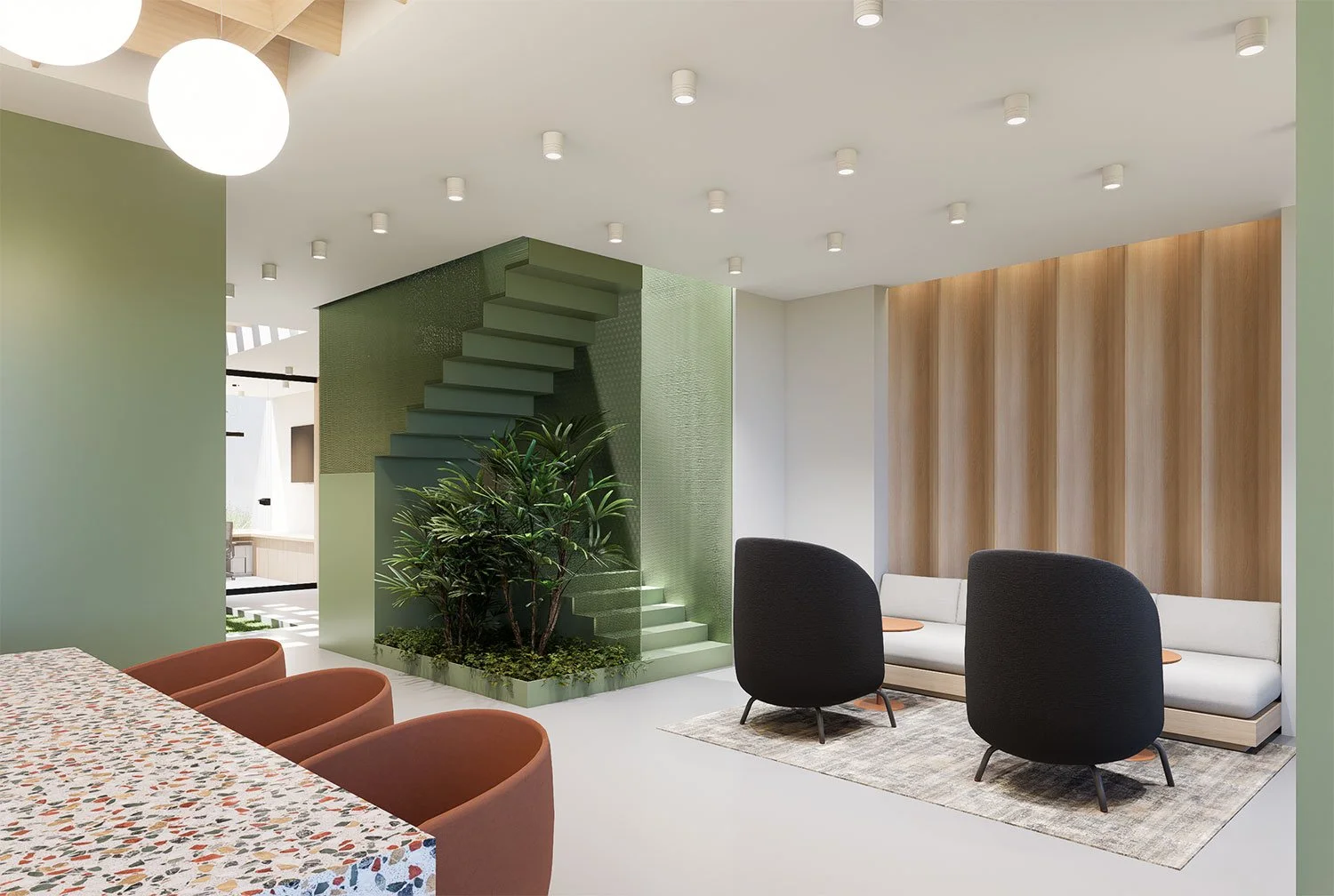
4. Maximize Natural Light (Strategically)
Commercial business owners are constantly searching for:
“how to brighten an office naturally”
“ideas for dark office spaces”
“daylight in commercial design”
Light is one of the most impactful elements in any workspace—but it must be managed smartly.
We use light to enhance both mood and brand polish:
Transparent or frosted glass walls increase natural light flow without sacrificing privacy.
Sheer window treatments soften glare but maintain daylight.
Light-toned wood amplifies brightness without appearing washed out.
Directional lighting helps illuminate work zones without feeling harsh.
Layered lighting (ambient + task + accent) ensures the space functions well across all activities.
What you want: a bright office with dimension, not a flat, overexposed space.
5. Think Beyond Plants: Use the Psychology of Color
If your brand is bold, crisp, or highly professional, you may think nature-inspired palettes lean too earthy or bohemian.
Not true.
A nature-integrated palette can be incredibly refined.
Colors we often recommend:
Muted greens for calm and focus
Soft taupes and sands for warmth
Charcoal and stone gray for grounding
Warm whites with depth
Terracotta accents for organic richness
Black for contrast and brand authority
Colors from nature tend to age gracefully, outlast trends, and support long-term brand consistency.
6. Bring the Outdoors In Through Texture, Shape, and Movement
Where some commercial designers stop at adding a plant, we ask:
How can the space feel natural—even in the absence of traditional greenery?
Here’s how:
Curved or organic-shaped furniture
Softens the rigidity of commercial architecture.Textured walls
Plaster, fluted wood, or fabric panels evoke natural surfaces.Water elements (in lobbies or wellness areas)
Sound contributes significantly to mood.Movement patterns
Hallway curves, canopy-style ceilings, and zoning choices mimic natural flow.
These choices influence stress levels, communication patterns, and overall comfort.

7. Prioritize Functionality—Nature Should Never Disrupt Work
This is where many commercial spaces fall short.
Business owners worry:
“Won’t all this greenery and texture make our office feel cluttered?”
It depends on the designer.
At Maybeck Design, the non-negotiable rule is:
Nature must support the workspace—not complicate it.
To maintain high performance:
We choose plant species based on light levels and maintenance capabilities.
We place greenery in ways that never obstruct vision lines or walkways.
We avoid materials that require excessive upkeep.
We integrate clean-lined storage to balance softer natural elements.
We space-plan based on workflow and efficiency before aesthetics.
The result: an office that feels warm and human—but still sharp, professional, and branded.
8. Choose a Design Strategy That Lasts (Trends Fade; Nature Doesn’t)
Commercial interiors typically operate on a 5–10 year design cycle.
The smartest investment?
Using nature-inspired materials and palettes that don’t go out of style.
Timeless anchors include:
Real wood (never goes out of fashion)
Stone with soft veining
Warm neutrals
Subtle greenery that feels architectural, not decorative
Neutral textiles with natural weaves
This creates a branded workspace that evolves with the business—without constant redesign.
The Bottom Line: Bringing the Outdoors In Is Not a Trend—It’s a Competitive Advantage
Modern workplaces must do more than house employees.
They must support:
Focus
Collaboration
Emotional well-being
Brand identity
Client impressions
Long-term employee retention
Biophilic, nature-integrated design does all of this—when executed with intention.
If you’re a commercial business owner, interior designer, or design enthusiast curious about how to elevate a workspace beyond the traditional corporate blueprint, start with our guiding question:
How can we bring the outdoors in—without losing the polish and performance of a branded office?
The answer will look different for every business, but the impact is always the same:
A workspace that feels alive, connected, and distinctly yours.
Want help creating a nature-integrated, high-performing office?
We specialize in commercial interiors that merge natural energy with brand precision.
If you're ready to transform your workspace, we’d love to be your creative partner.