
How Smart Office Zoning Turns Workplace Chaos into Clarity
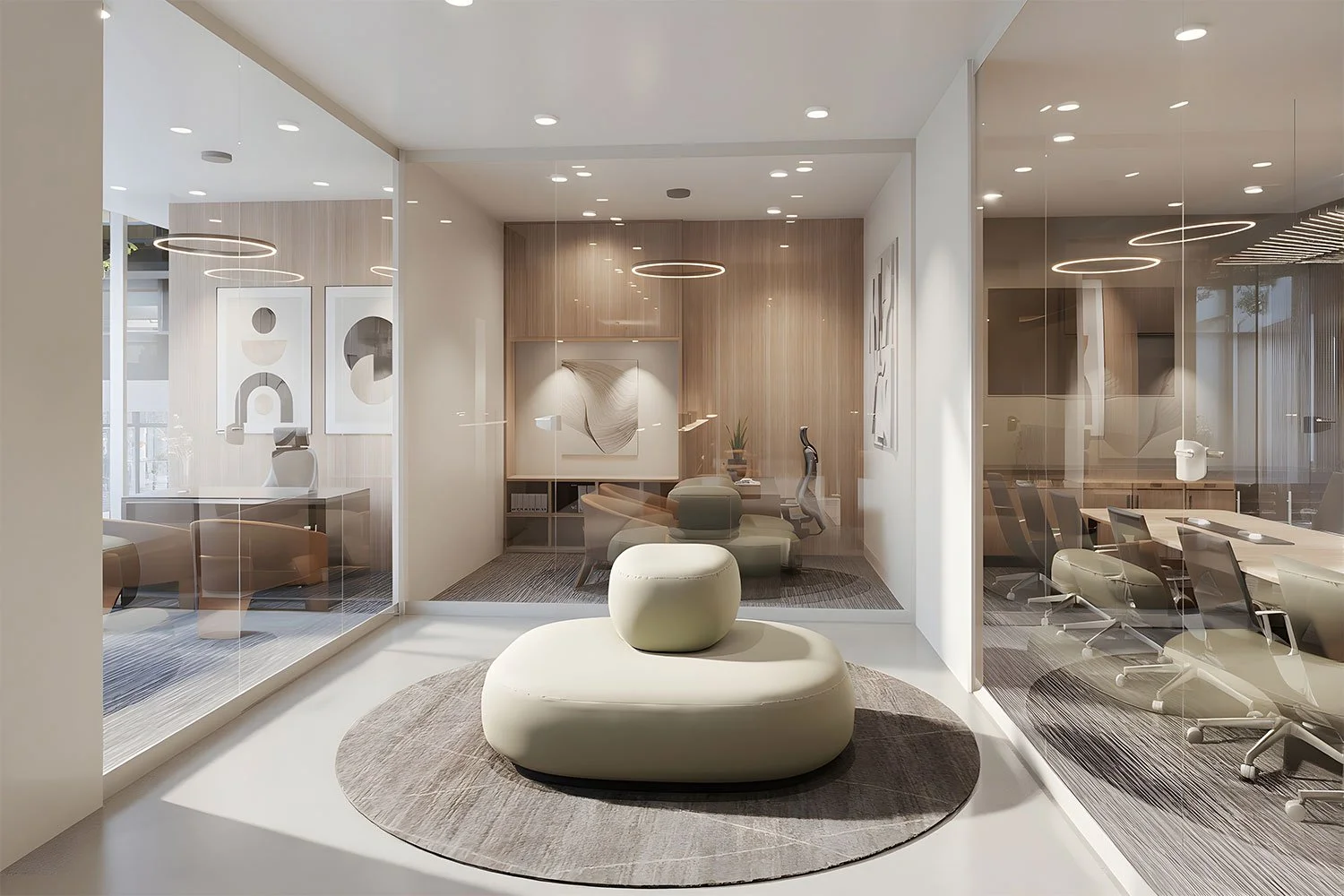
Walk into any commercial office today—whether it’s a boutique financial firm, a fast-scaling tech company, or a multi-location professional services group—and you’ll sense the same tension humming in the air. Employees arrive, but they don’t stay in one place for long. Someone wanders the perimeter hunting for a quiet nook.
A project team clusters around an unreserved table that wasn’t meant for meetings but is the only available zone for a quick sync. People whisper about noise levels that feel unpredictable. HR circulates a survey about “improving collaboration,” while IT sends out instructions trying to standardize how hybrid meetings should run. Leadership champions culture in team-wide emails—but that culture rarely feels embodied in the actual space.
This is the modern workplace disconnect: the company’s goals live in one world, while its environment operates in another.
What many business owners don’t realize is that culture isn’t weakened by a lack of effort. It’s weakened by a lack of environmental clarity. When the physical office doesn’t reinforce the behaviors the business relies on—focus, alignment, collaboration, connection, and creative recovery—no amount of policy or pep talk can fill the gap.
At Maybeck, we’ve spent years helping commercial organizations close this gap through an approach we call Culture by Design. It’s the belief that the physical environment should quietly support and elevate the rhythms of work, removing the friction that drains focus and energy. Through zoning, behavioral mapping, and sensory tuning—lighting, acoustics, circulation, and materiality—we create workplaces that feel intuitive, functional, and human. And when that happens, engagement rises, productivity steadies, and teams actually choose the office because it works for them.
In this article, we’ll unfold how strategic workplace zoning transforms the modern office, why HR, IT, and leadership alignment is essential, and how small shifts in design language can produce outsized organizational results. If you’re a business owner wrestling with disengagement, distraction, or hybrid uncertainty, this is your blueprint for designing an office where employees don’t merely show up—they thrive.
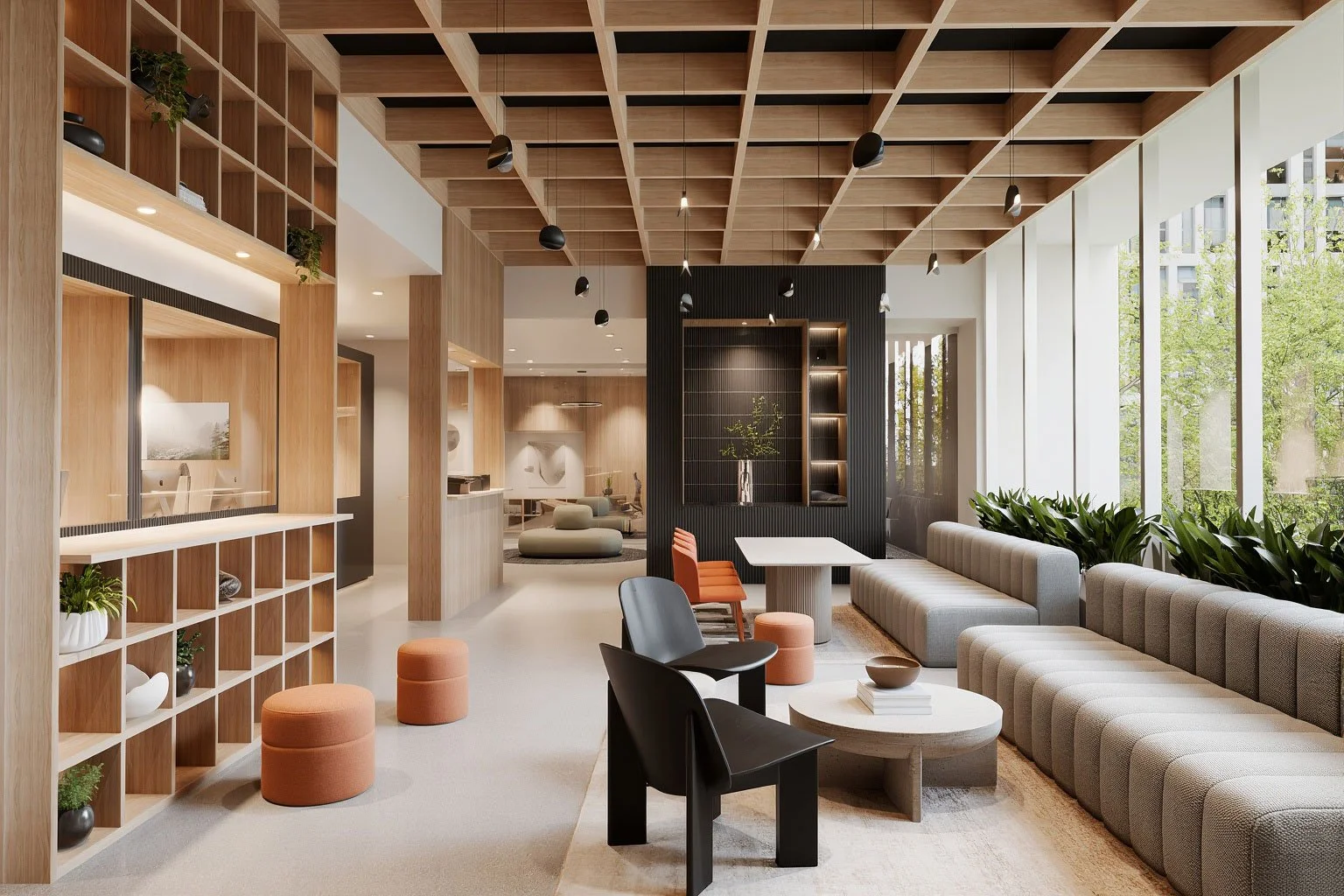
Why Most Offices Don’t Match the Way Work Actually Happens
One of the biggest performance leaks in commercial offices is misalignment between space and workflow. Most workplaces were built around outdated assumptions: everyone works from a desk, meetings happen in conference rooms, and collaboration is best achieved by putting people physically close together—even if that means relentless background noise and constant interruptions.
But real work has changed.
Teams now shift rapidly throughout the day between:
heads-down concentration
quick project huddles
scheduled collaboration
informal connection moments
virtual meetings
quiet mental resets
and hybrid in-person/remote interactions
In high-performing organizations, these activities aren’t random—they have patterns. They have rhythms. And those rhythms deserve dedicated spaces that protect, enhance, and streamline them.
When we walk into an office that “isn’t working,” we almost always find the same symptoms:
Quiet areas that aren’t actually quiet
Meeting rooms that are always booked for things they weren’t designed for
Social areas that are too loud, too central, or too awkward
Circulation paths that force employees through bottlenecks
Lighting that drains energy or triggers fatigue
Tech setups that vary from room to room, creating confusion and friction
Hybrid meetings that feel chaotic because the environment can’t support them
And yet executives will often blame the culture, the hybrid model, the generation gap—or even the employees themselves.
The truth is far simpler:
People aren’t disengaged.
The environment is disorganized.
When you correct the environment, behaviors follow.
The Power of Intentional Zoning: Four Spaces Every Modern Office Needs
At the heart of Culture by Design is a foundational principle: engagement rises when spaces match behaviors. That means we begin every workplace strategy by mapping how work actually happens—not how it used to happen, not how someone hopes it might happen, but the real tactical flow of a team’s day.
From that behavioral map, we design around four essential zones:
1. Focus — The Sanctuary of Deep Work
Every commercial business relies on periods of deep concentration. Whether it’s financial analysis, strategic planning, writing, coding, or client deliverables, uninterrupted focus is a competitive advantage.
Yet many offices treat focus as optional. The result? Employees hunting for headphones, empty rooms, or remote days just to get work done.
A true focus zone is:
Quiet by default
Shielded from circulation paths
Acoustically optimized (not just soundproof—sound-balanced)
Lit with layered, dimmable lighting to support visual comfort
Scaled to humans, not industrial volumes
Neutral in color palette to reduce sensory overload
At Maybeck, our design language emphasizes calm, warm neutrality—honest materials, clean lines, textures that ground the nervous system. Focus isn’t about sterility; it’s about removing friction.
When employees can settle quickly into concentration without fighting their environment, productivity becomes a natural output—not an uphill battle.
2. Huddle — Fast Alignment for Faster Decisions
Teams today need highly flexible collaboration zones—places where five minutes can clarify what emails or Slack threads drag out for days. These huddle zones function as the energetic heartbeat of a project-driven workplace.
Unlike traditional conference rooms, huddle spaces are meant to be:
Open or semi-open
Energized but not loud
Highly adaptable with modular furniture kits
Tech-enabled for instant connectivity
Strategically lit to support alertness
We design huddle areas with sightlines that encourage quick drop-ins but acoustics that prevent the “airport lounge effect” where conversations spill into unrelated areas.
One thing business owners often underestimate is speed. The faster a team aligns, the faster decisions get made. And faster decisions drive revenue, reduce backlogs, and increase client satisfaction. Huddle zones—done well—create that speed without chaos.
3. Social — Where Culture Quietly Builds Itself
You don’t create culture in mandatory events.
You create culture in small, repeated moments where connection feels natural.
A coffee chat.
A laugh between coworkers.
A spontaneous brainstorm.
A moment of genuine curiosity.
But these moments only happen when the environment supports them. Not performatively—authentically.
We shape social spaces using:
honest materials that feel warm, not staged
clear circulation that encourages small collisions without creating crowding
seating clusters geared toward fluid interaction
neutral tones that allow people—not décor—to be the focus
Poorly designed social areas either become ghost towns or noise bombs. But when designed with emotional and behavioral intention, they become the subtle glue that binds teams.
4. Reset — The Missing Piece of Productivity
“Break rooms” are not enough. Employees don’t reset in spaces that feel like afterthoughts—or worse, like cafeterias.
Reset spaces should be:
emotionally distinct from working zones
sensory-calming, with soft lighting and subdued acoustics
free of performance pressure
physically comfortable, offering softer seating and natural textures
protected from overflow work chatter
This is where burnout prevention becomes tangible. When people can breathe, decompress, and return to work feeling neurologically refreshed, performance rises—and so does retention.
Many business owners are surprised to learn that reset spaces often deliver one of the highest ROI metrics in workplace design. Because clarity, creativity, and emotional resilience aren’t luxuries. They are fuel.
The Sensory Science Behind Culture by Design
Workplace design isn’t just about where desks go. It’s about how people feel in the space. That sensory experience determines whether they can think clearly, collaborate confidently, and engage fully.
Three sensory elements are especially influential:
1. Acoustics
Acoustics are often the silent saboteur of workplace performance. Too much reverberation—stress rises. Too much silence in the wrong place—awkwardness rises. Zoning allows us to intentionally modulate sound signatures:
Quiet zones absorb
Huddle zones balance
Social zones diffuse
Reset zones soften
Good acoustics don’t draw attention. They simply disappear into the background, enabling flow.
2. Lighting
Lighting controls mood, cognition, and energy. We use layered lighting systems that adapt throughout the day:
Bright, focused task lighting for deep work
Warmer ambient lighting for social spaces
Adjustable options for hybrid or screen-heavy zones
Calming, soft lighting for reset areas
Lighting should support human biology, not fight it.
3. Materiality & Scale
Human-scale design is increasingly rare—but increasingly needed. Overly large, industrial-feeling spaces can make employees feel more exposed and less grounded.
Warm woods, matte finishes, natural fabrics, and tactile textures help people regulate themselves emotionally and cognitively. These choices aren’t “cosmetic.” They’re functional.
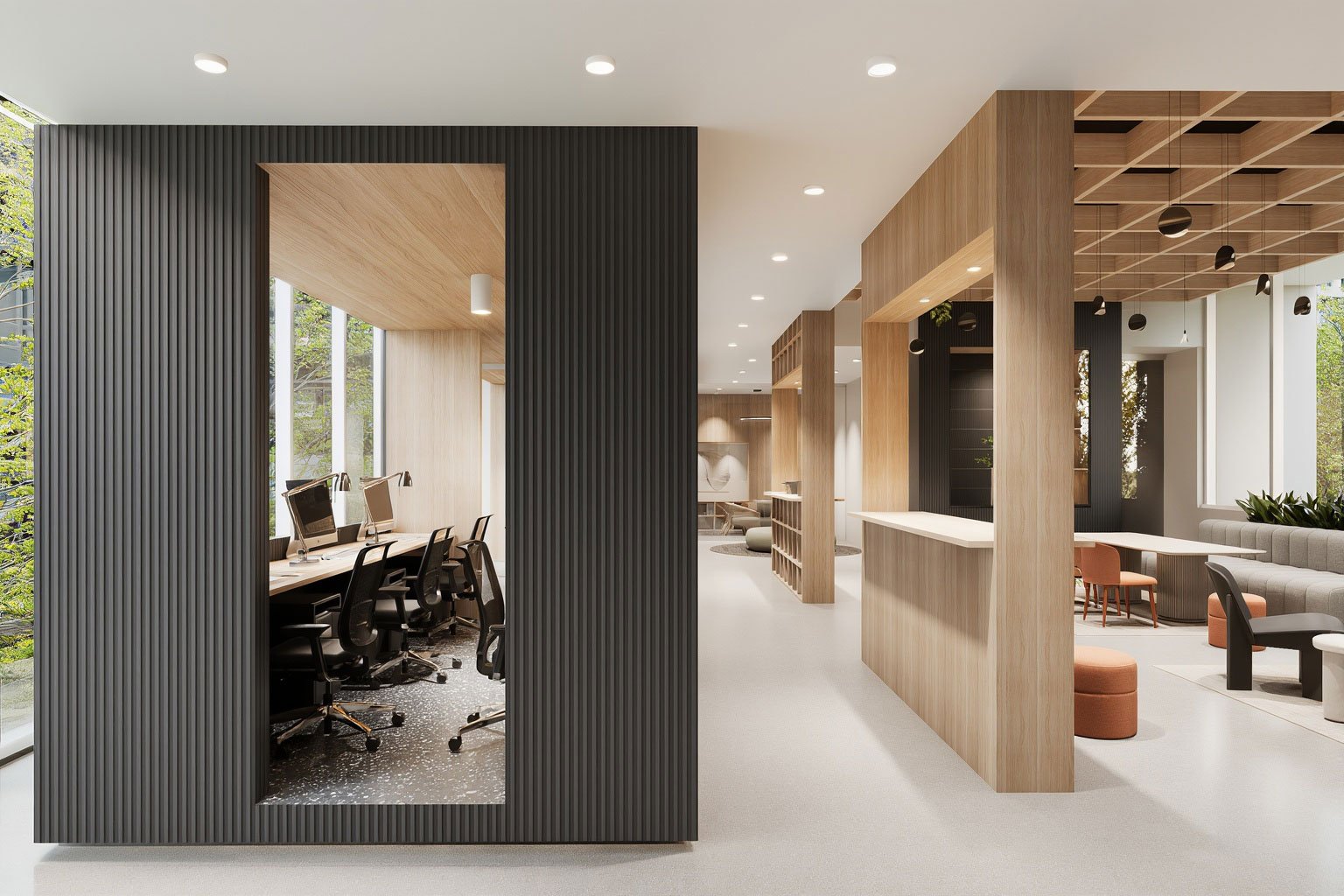
Why HR, IT, and Leadership Must Align Early
Culture by Design is not a design-first process.
It’s a behavior-first, workflow-first, human-first strategy.
That’s why we begin by aligning HR, IT, and leadership.
Each has priorities:
HR cares about engagement, retention, well-being, and equity.
IT cares about seamless tech, hybrid meeting reliability, and standardized systems.
Leadership cares about productivity, cohesion, and business outcomes.
When these three groups operate separately, offices become patchwork environments—improvised, confused, and contradictory.
When aligned, they create a single clear vision:
where work happens
how work happens
what behaviors matter most
how the environment should reinforce those behaviors
what systems reduce friction
what signals guide employees intuitively through the space
This alignment is often the biggest transformation a company experiences—even before any walls move or furniture arrives. Because clarity among decision-makers directly translates to clarity across the entire organization.
The Business Outcomes: What Happens When Teams Choose the Office
When workplaces are designed intentionally, employees begin choosing the office again—not because they’re required to, but because it works.
Business owners see:
Fewer distractions — because sensory clarity reduces cognitive load
Faster decisions — because huddle zones streamline alignment
Higher engagement — because people feel supported, not drained
More consistent collaboration — because spaces are intuitive and flexible
Reduced friction — because circulation paths and signals guide behavior
Improved hybrid participation — because tech and acoustics are standardized
Stronger culture — because connection happens organically
Most importantly:
The workplace becomes an asset—not an obstacle.
It supports the business.
It reflects the brand.
It empowers the team.
And it gives employees a reason to come in, contribute, and grow.
This is culture by design—not by accident.
Transforming Your Workplace Starts with One Simple Question
If your office feels busy but not productive, active but not aligned, full but not functional, the issue isn’t motivation. It’s environment.
The question is:
Does your workplace support the behaviors you depend on most?
If the answer is “not really,” then you’re not alone—and you’re not stuck.
By zoning your office around focus, huddle, social, and reset behaviors—and by tuning each with acoustics, lighting, materials, and circulation—you can rebuild the workplace into a tool your business uses every day.
Your culture already exists.
Let’s design a space that supports it, strengthens it, and brings it to life.