
The Power of WELL-Being: How Comfort & Mind Standards Transform Commercial Interiors
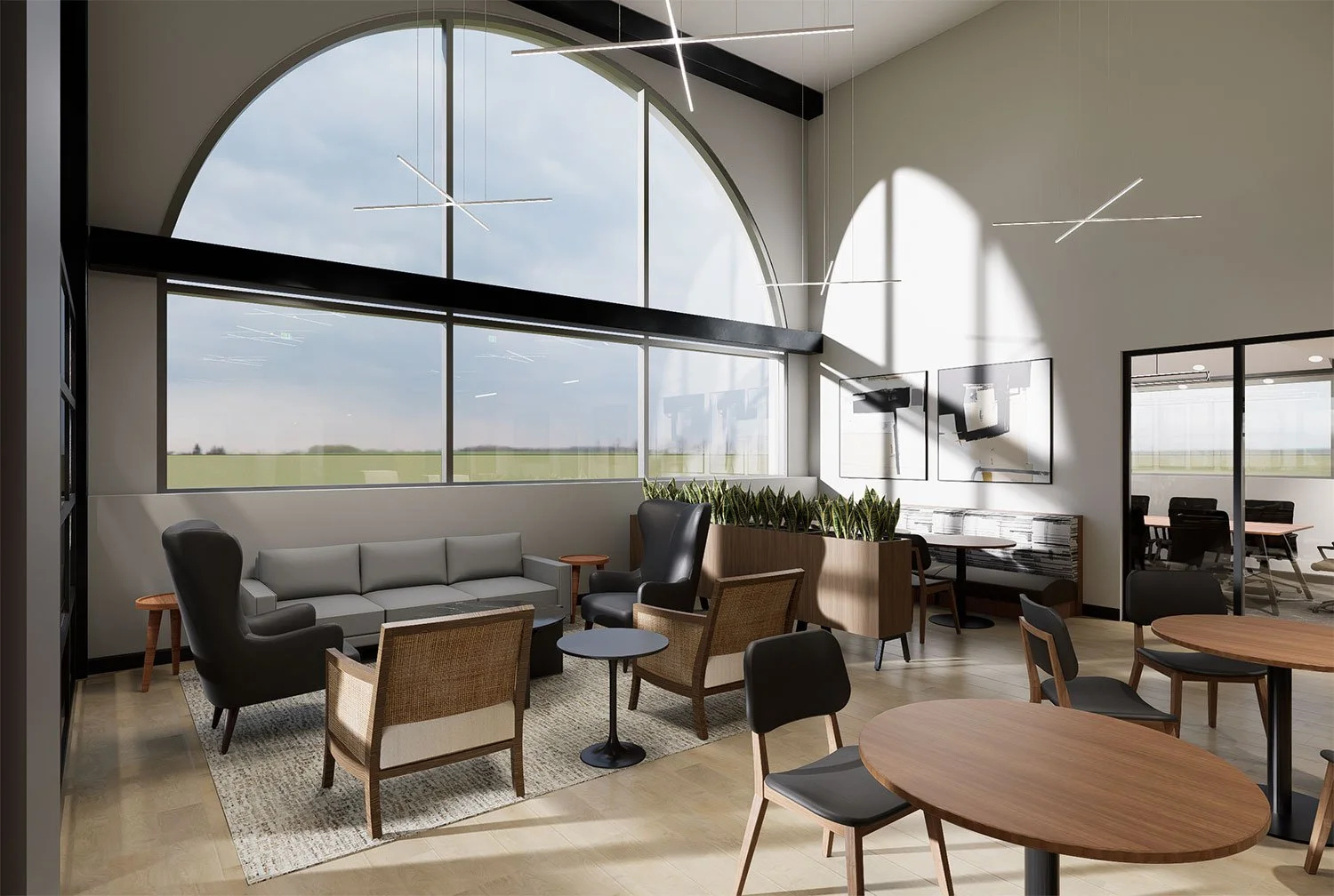
As commercial business owners look for new ways to elevate workplace performance, attract top talent, and future-proof their organizations, interior design has emerged as a strategic advantage—not just a visual one. Modern businesses increasingly understand that the environments they create significantly impact employee wellness, concentration, and emotional health.
At the forefront of this movement is the WELL Building Standard, a global framework that connects design decisions with measurable improvements in human well-being. Among its many concepts, Comfort and Mind are two of the most influential for shaping commercial interiors that support productivity, satisfaction, and long-term organizational success.
In this article, we explore how these WELL principles translate into real-world design strategies that directly benefit businesses—and the people who power them.
Why WELL-Being Design Matters in Today’s Business Landscape
Workplace expectations have fundamentally changed. Employees want more from their work environment than a desk and Wi-Fi. They expect comfort, emotional support, and purposeful design that acknowledges the pressures of modern work life.
Commercial businesses now compete not just on brand or salary, but on environmental experience.
Well-being-driven interior design:
Reduces employee turnover
Strengthens company culture
Minimizes operational friction
Boosts focus and creative thinking
Improves customer perception and brand identity
This shift is not merely aesthetic—it's strategic. Spaces that prioritize mental and physical well-being create measurable returns.
Understanding Comfort in Workplace Design
Comfort is a foundational component of the WELL framework, but it goes far deeper than choosing ergonomic chairs or temperature controls. It describes an environment where people can perform without distraction or physical strain.
Here’s how commercial interior design can satisfy—and surpass—the WELL concept of comfort.
Acoustic Comfort: Designing Out Noise, Designing In Focus
In most workplaces, noise is one of the biggest contributors to stress and distraction. Conversations, HVAC noise, printers, and hallway traffic can chip away at concentration minute by minute.
Smart acoustic design creates a more predictable, calmer environment using strategies like:
Sound-absorbing ceilings and wall panels
Space zoning that separates focus areas from collaborative ones
Acoustic partitions in open offices
Soft materials (carpets, upholstered furnishings) that dampen noise
These aren’t simply upgrades—they’re performance enhancers. When noise is controlled, focus improves, meetings run more efficiently, and stress levels drop.
Thermal Comfort: A Temperature Strategy, Not a Setting
Everyone has experienced the discomfort of an office that’s too cold or too warm. What few realize is the direct impact temperature has on cognitive stamina and emotional well-being.
Thermal comfort in WELL-aligned design means:
Allowing zoned climate control so departments can regulate their own areas
Using smart thermostats that adapt to occupancy
Integrating shading, insulation, and airflow improvements
Temperature is subjective, but discomfort is universal. A thoughtful thermal strategy ensures people stay focused longer and experience less fatigue.
Ergonomic Comfort: Supporting Bodies to Support Performance
Ergonomics is not a furniture trend—it's a crucial factor in long-term employee health.
Ergonomic commercial spaces prioritize:
Adjustable seating and desks
Thoughtful workstation layout
Reach and sight-line considerations
Movement-friendly planning (stairs, circulation paths, layout flow)
These choices reduce strain, prevent repetitive-use injuries, and improve posture. Businesses gain healthier employees, fewer sick days, and higher performance.
Visual & Olfactory Comfort: The Overlooked Drivers of Satisfaction
Cluttered sight lines and unpleasant smells subtly influence mood and productivity.
WELL-aligned design reduces these stressors by:
Ensuring clean visual lines and organized spatial flow
Integrating high-quality ventilation
Using low-VOC materials
Choosing lighting that minimizes glare and eye fatigue
When the senses are comfortable, the mind follows. This is where the crossover between Comfort and Mind becomes powerful.
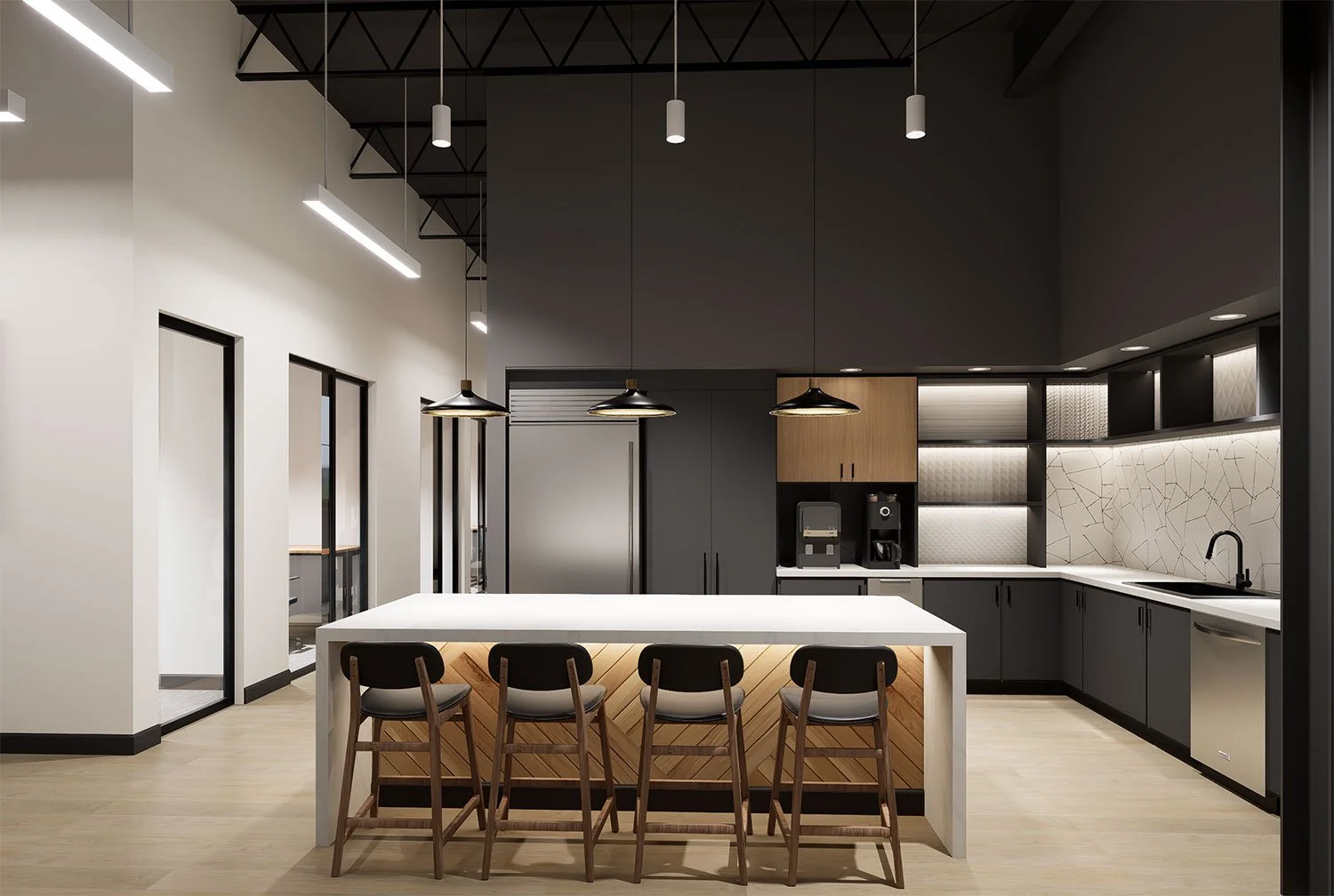
Designing for the Mind—Where Aesthetics Meet Psychology
The WELL concept of Mind focuses on creating environments that support emotional well-being, cognitive clarity, and positive mental health.
In commercial spaces, this is where design becomes less about objects and more about human experience.
Biophilic Design: A Natural Solution to Stress and Fatigue
Humans are biologically wired to respond positively to nature. Biophilic design—the integration of natural elements into built environments—has become one of the most scientifically supported design strategies for mental wellness.
Incorporating biophilia can include:
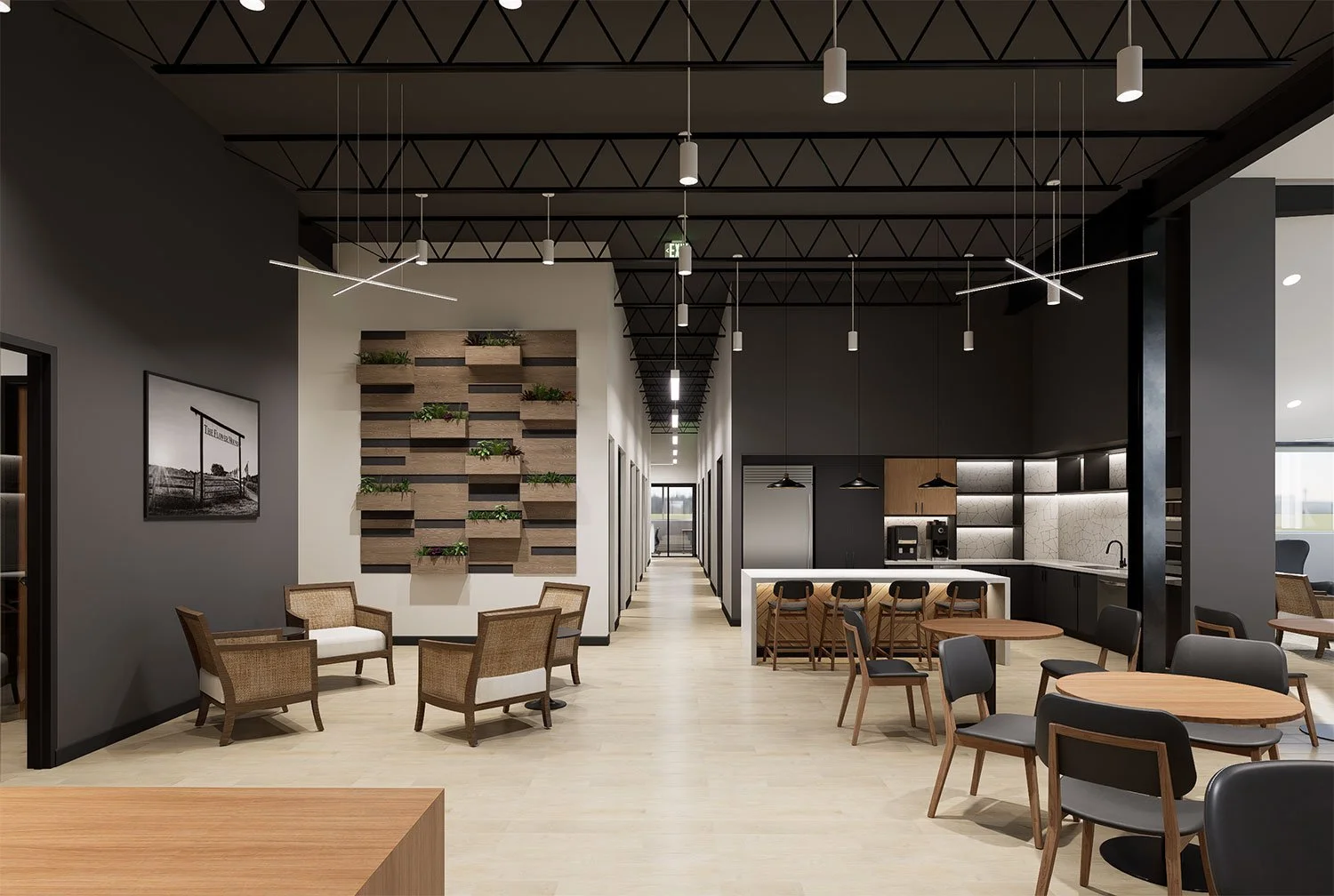
Living plant walls
Indoor greenery and planter systems
Wood, stone, and natural finishes
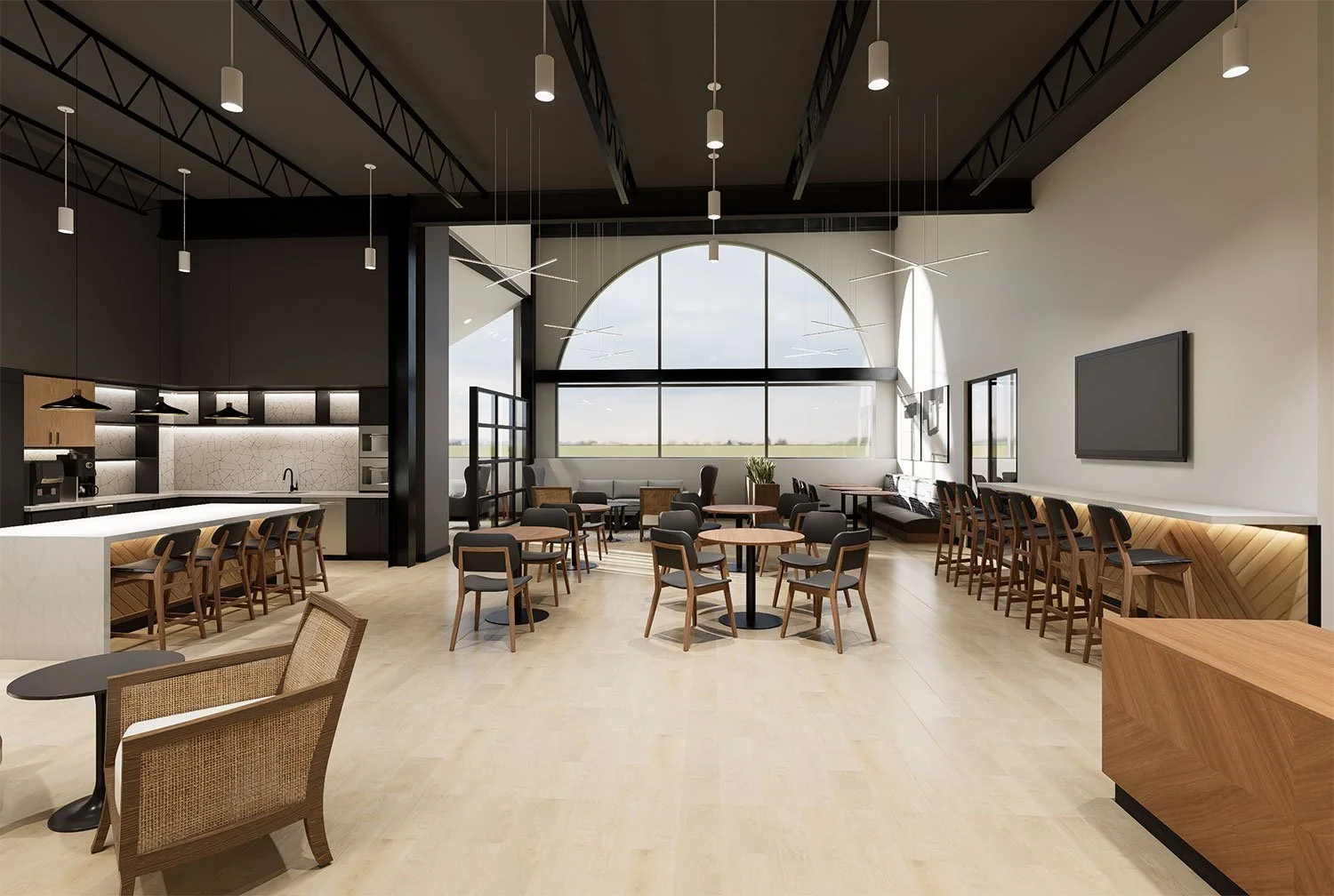
Access to outdoor views
Water features
Nature-inspired artwork or patterns
These elements reduce stress hormones, increase alertness, and support a more grounded emotional state. For employees dealing with deadlines or pressure, this creates a more resilient workday.
Aesthetic Nourishment: Design That Emotionally Uplifts
Aesthetics aren’t about decoration—they're about creating environments that inspire and energize.
Emotionally supportive design might incorporate:
Warm, calming color palettes
Meaningful artwork
Curated textures and materiality
A clear design identity that aligns with company culture
Architecture that evokes openness rather than confinement
When a commercial interior is thoughtfully composed, it sends a message: this is a place where quality and well-being matter.
That message influences employee pride, client perception, and overall morale.
Mindful Spatial Planning: Reducing Cognitive Overload
Clutter isn’t just physical—it creates mental noise. Chaotic layouts, disorganized storage, and overcrowded work zones increase stress and reduce performance.
Mind-supportive spatial planning includes:
Clear circulation paths
Purpose-built collaboration and quiet zones
Intentional transitions between high-energy and low-energy areas
Storage solutions that keep workspaces visually clean
Breakout spaces that offer retreat from pressure
A well-planned environment gives employees room to think, breathe, and process—keys to sustainable performance.
Restorative Spaces: Creating Micro-Moments of Recovery
High-performing employees need moments of rest to maintain momentum. Restorative spaces, even small ones, serve as mental reset zones.
Examples include:
Quiet lounges
Phone-free meditation corners
Soft-seating areas with natural light
Wellness rooms designed for privacy and solitude
These additions help reduce burnout and increase focus throughout the day.
The Business ROI of Comfort & Mind in Workplace Design
Commercial interior design that prioritizes well-being isn’t a luxury—it’s an investment with tangible returns.
Here’s what business owners gain:
1. Increased Productivity and Cognitive Performance
When employees have the right environmental support:
Their concentration improves
They make fewer mistakes
They switch tasks more smoothly
They can maintain mental stamina longer
WELL-aligned spaces are performance environments.
2. Higher Employee Retention
A comfortable, mentally supportive office:
Reduces burnout
Improves day-to-day satisfaction
Helps employees feel valued
In markets where talent retention is a challenge, design becomes a competitive advantage.
3. Stronger Company Culture & Identity
Commercial interiors communicate brand values. When a workspace supports wellness:
It reinforces the culture companies want to build
It enhances team connection and pride
It creates consistency between brand message and lived experience
A thoughtful interior becomes a cultural anchor.
4. Improved Health Outcomes & Reduced Absenteeism
Comfort and Mind principles directly influence:
Stress levels
Fatigue
Musculoskeletal issues
Mental clarity
Emotional resilience
Healthier employees mean fewer sick days and higher organizational stability.
Practical Ways to Apply Comfort & Mind in Your Commercial Space
If you’re considering integrating WELL-aligned strategies into your commercial environment, here’s where to begin.
1. Conduct a Workplace Well-Being Audit
A strategic evaluation includes:
Noise mapping
Temperature fluctuations
Furniture ergonomics
Lighting quality
Spatial flow
Mental rest opportunities
Access to nature
This identifies high-impact improvement zones.
2. Prioritize High-Value Upgrades
Not every improvement requires a full renovation. Small shifts make a difference:
Upgrade lighting to reduce glare
Add acoustic treatments
Introduce plants and natural materials
Improve layout clarity
Add relaxation or focus spaces
Replace outdated, uncomfortable furniture
The goal is progress, not perfection.
3. Create a Balanced Mix of Work Zones
Every workforce needs:
Focus spaces
Collaboration areas
Private meeting rooms
Social zones
Restorative areas
Flexibility supports diverse work styles.
4. Invest in Quality Materials and Systems
Choose interior elements that support comfort:
Low-emission finishes
High-performance HVAC
Ergonomic furnishings
Textured acoustic panels
Warm, human-centric lighting
Quality improves longevity and experience.
5. Align Design with Company Culture
A WELL-inspired workplace doesn’t mean neutral or generic. It should reflect:
Your brand personality
Your team’s work style
The emotional experience you want to create
Meaningful design resonates deeply.
Conclusion: Designing for Comfort & Mind Creates Better Business
Comfort and Mind principles from the WELL framework aren’t just design guidelines—they’re a roadmap to healthier, happier, more productive commercial environments.
When businesses invest in environments that support well-being, the payoff is clear:
Stronger performance
Lower turnover
Higher satisfaction
Better brand perception
More resilient teams
The most successful companies of the future will be those that treat the workplace not only as a space—but as a strategic asset that supports human potential.