
The Anchor Effect: Why "Moments" are the New Currency of Hospitality Design
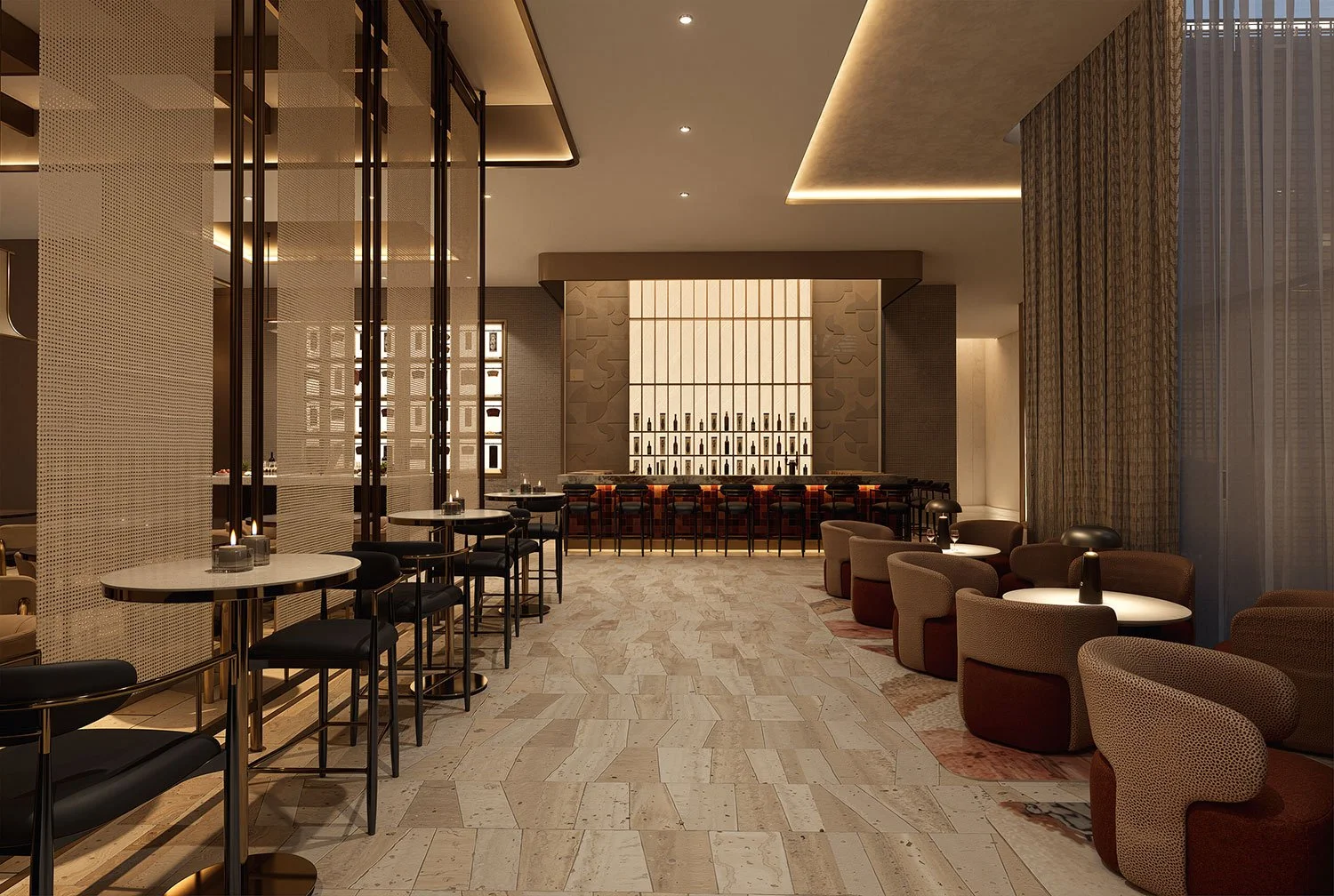
In the hyper-competitive world of 2026 hospitality, a well-designed room is no longer enough to ensure success. We have reached "peak aesthetic"—a point where almost every new hotel is visually competent. But competence does not drive loyalty, and it certainly doesn’t drive a premium ADR (Average Daily Rate).
At Maybeck Design, we’ve identified that the most successful commercial assets are not those that are "perfect" from wall to wall, but those that possess a Signature Moment. These are intentional, high-impact architectural gestures that anchor a guest’s memory and define the property’s brand.
If Quiet Luxury is the "whisper" of the building, the Signature Moment is its "soul."
The Science of the "Peak-End Rule"
To understand why "moments" matter, we must look at how the human brain processes experiences. Behavioral psychologists often cite the Peak-End Rule, which suggests that we do not judge an experience based on the sum total of every second. Instead, we remember the most intense point (the "peak") and the very end.
In hospitality, if the entire guest journey is a flat line of "nice" design, it becomes forgettable. By intentionally engineering a "Peak" through a dramatic design moment, Maybeck Design ensures that even weeks after checkout, the guest can still vividly recall the feeling of the space.
1. The Entrance: The Architecture of Decompression
The first 30 seconds a guest spends in a property are the most critical. This is the "Entry Sequence," and for Maybeck, it is the ultimate opportunity for a Signature Moment.
We view the entrance as a psychological transition. The guest is coming from the noise of the city, the stress of travel, and the friction of the outside world. The entry sequence must act as a "palate cleanser."
Compression and Release: We often utilize a lower, darker entry vestibule that suddenly opens into a voluminous, light-filled lobby. This physical "release" triggers a subconscious sigh of relief in the guest.
The Threshold: We focus on the "tactile arrival." Whether it’s a massive, hand-carved stone reception desk or a singular, floor-to-ceiling pivot door made of reclaimed oak, the first thing a guest touches or sees must signal that they have arrived somewhere unique.
The Olfactory Moment: While we are architects, we design for the nose, too. Strategic placement of ventilation near the entrance allows for a signature scent to be part of the architectural "moment."
2. The "Jewelry Box" Strategy: High-Density Detail
Not every square foot of a commercial project can—or should—be a masterpiece. If everything is special, nothing is. At Maybeck Design, we utilize the "Jewelry Box" strategy: we select a small, confined space and apply a density of detail that would be overwhelming if used throughout the whole hotel.
The Speakeasy Library: We might design a suite of rooms that are airy and light, but then hide a moody, velvet-wrapped library bar behind an unmarked door.
The Elevating Mailroom: In multi-family or hybrid-hospitality assets, the mailroom is usually an afterthought. We turn it into a social anchor—using brass-inlay cabinetry, gallery-style lighting, and high-end marble surfaces.
The "Secret" Garden: A signature moment can be an internal courtyard that guests only discover after checking in, creating a sense of exclusive "insider" knowledge.
3. Designing for the "Digital Echo"
We cannot discuss modern hospitality without acknowledging the role of social media. However, in 2026, the "Instagrammable" moment has evolved. Guests are no longer looking for neon signs or "angel wing" murals; they are looking for Authentic Vibe.
A Maybeck Signature Moment drives "Organic Marketing" because it is inherently photogenic through its quality, not its gimmicks.
Architectural Light: A skylight that casts a dramatic shadow across a textured plaster wall at 4:00 PM is a moment that guests want to capture.
Material Honesty: A close-up of a perfectly joined wood corner or the vein of a rare marble slab speaks to a level of luxury that "loud" design cannot reach.
The Result: This user-generated content (UGC) acts as a high-trust digital echo, reaching thousands of potential guests and lowering the developer's customer acquisition costs.
4. The ROI of Memorable Design
From a developer’s standpoint, "Moment Design" is a strategic allocation of capital. Rather than spending a medium amount of money to make the whole building "above average," we recommend spending strategically to make specific areas "world-class."
Asset Differentiation: In a sea of standardized brands, your "moment" is your competitive moat. It is the thing that makes a guest say, "Let’s go back to that hotel with the incredible stone fireplace."
Increased Property Value: High-quality, memorable architectural features increase the long-term appraisal value of the real estate. They are not "decorations" that will be ripped out in five years; they are "fixtures" that appreciate with the building.
Reduced Renovation Fatigue: Because these moments are built with permanent materials (stone, metal, high-end timber), they don't date. A well-executed entrance sequence is just as powerful 20 years from now as it is today.
The Maybeck Distinction: Design with a Point of View
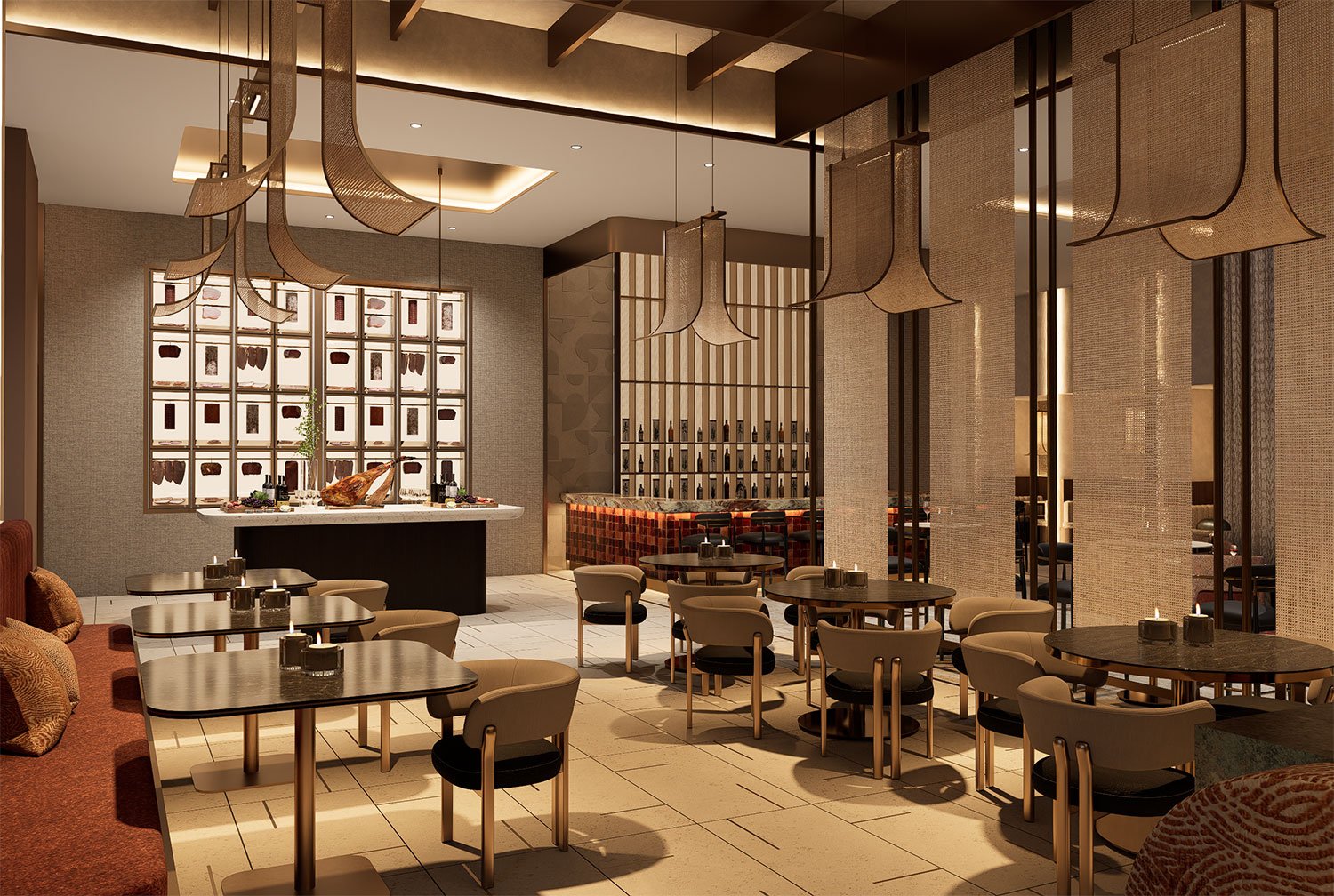
What sets Maybeck Design apart in the execution of these moments is our refusal to follow the "prescriptive" path of hospitality branding. While many firms design for the camera first, we design for the human cadence.
We don’t just look for a wall to hang art on; we look for the "invisible nodes" of a building—the quiet corner where a guest naturally pauses, or the transitional hallway that feels slightly too long. We transform these architectural "dead zones" into vibrant, high-value signature moments.
By blending high-level architectural rigor with a deep understanding of guest psychology, we ensure that our focal points aren't just beautiful—they are necessary. We aren't just creating a "feature"; we are defining the rhythm of the guest experience, ensuring that every Maybeck project has a heartbeat that is distinctly its own.
Strategic Design Insights: Your Questions on Hospitality Differentiation
Q: How does Maybeck Design identify where a "Signature Moment" should be placed?
A: We analyze the "Guest Journey Map." We identify the natural points of friction or transition—where a guest pauses, waits, or gathers—and we elevate that specific location into a focal point to maximize emotional impact.
Q: What is the ROI of creating "Instagrammable moments" in hospitality design?
A: In 2026, "Moment Design" serves as a low-cost, high-reach marketing tool. High-quality, authentic focal points drive user-generated content (UGC), which acts as a powerful social proof. Beyond marketing, these moments increase the perceived value of the asset, allowing for higher ADR and stronger brand loyalty.
Q: Can a "Signature Moment" be part of Quiet Luxury?
A: Absolutely. A "moment" doesn't have to be loud or flashy. At Maybeck Design, a signature moment might be a singular, floor-to-ceiling block of hand-carved stone or a perfectly placed skylight that tracks the sun across a plaster wall. It is defined by its impact, not its noise.
Q: How do memorable design features differentiate a commercial asset?
A: Differentiation comes from "Information Gain." In a sea of standardized hotel chains, a unique, architecturally significant moment provides the guest with a story to tell. This narrative differentiation is what prevents a property from becoming a commodity.
Closing Thoughts: Beyond the Surface
At the end of the day, a commercial space is more than a collection of square footage; it is a repository for human experience. In an era where hospitality is often reduced to a series of standardized metrics, we believe that the true value of an asset is found in its ability to resonate on a personal level. By weaving together the restraint of Quiet Luxury with the strategic impact of a Signature Moment, we create environments that don't just occupy space—they occupy memory.
For Maybeck Design, success isn't measured by how many people see a space, but by how many people are moved by it. We don't just build interiors; we build the backdrop for the stories your guests will tell for years to come. That is the lasting power of intentional design.