Your Office is a Sensory Minefield: Why "Neuro-Inclusion" is the CEO’s Secret Weapon for 2026
If you are a commercial business owner, you’ve likely heard the term "neurodiversity." But if you think this is just a human resources checkbox or a feel-good diversity initiative, you are missing the most significant productivity lever of the decade.
Let’s look at the math. Approximately 15-20% of your workforce is neurodivergent—this includes individuals with ADHD, Autism, Dyslexia, and Hyper-sensitivity. These aren’t "disabilities" to be accommodated; these are the brains behind your most innovative problem-solving, your most meticulous pattern recognition, and your most creative storytelling.
However, at Maybeck Design, we have seen how the traditional "open-plan" office acts as a cognitive tax on these exact individuals. When you force a brilliant, neurodivergent mind into a sensory-unregulated environment, you aren’t just making them uncomfortable. You are actively sabotaging your company's ROI.
In 2026, the highest-performing businesses aren't just "going green"—they are going Neuro-Inclusive.
The High Cost of Sensory Friction
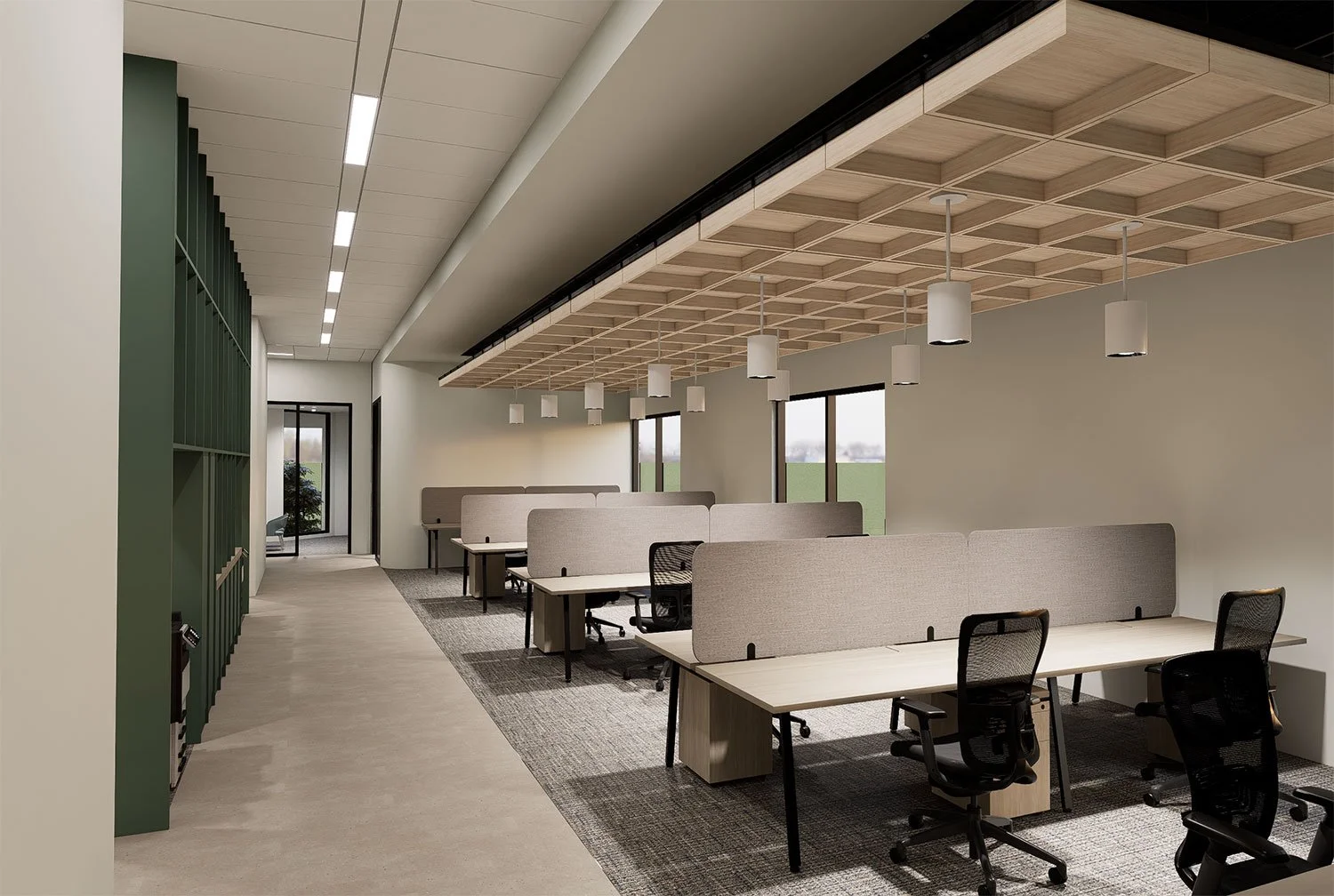
Most commercial offices are designed for a fictional "average" person who doesn't exist. They are filled with flickering LED lights, unpredictable acoustic spikes, and high-traffic "fishbowl" glass walls.
For a neurotypical brain, these are minor annoyances. For a neurodivergent brain, these are biological threats. When the brain perceives a sensory threat (like a loud conversation three desks away or a persistent humming HVAC), it triggers the sympathetic nervous system. The result? Cortisol spikes, "brain fog," and a total collapse of deep-focus work.
At Maybeck Design, we don't just pick furniture; we engineer Cognitive Ergonomics. We believe that if an office isn't supporting the diverse ways your team processes information, it’s a failed asset.
Beyond the Open Plan: The "Ecosystem of Choice
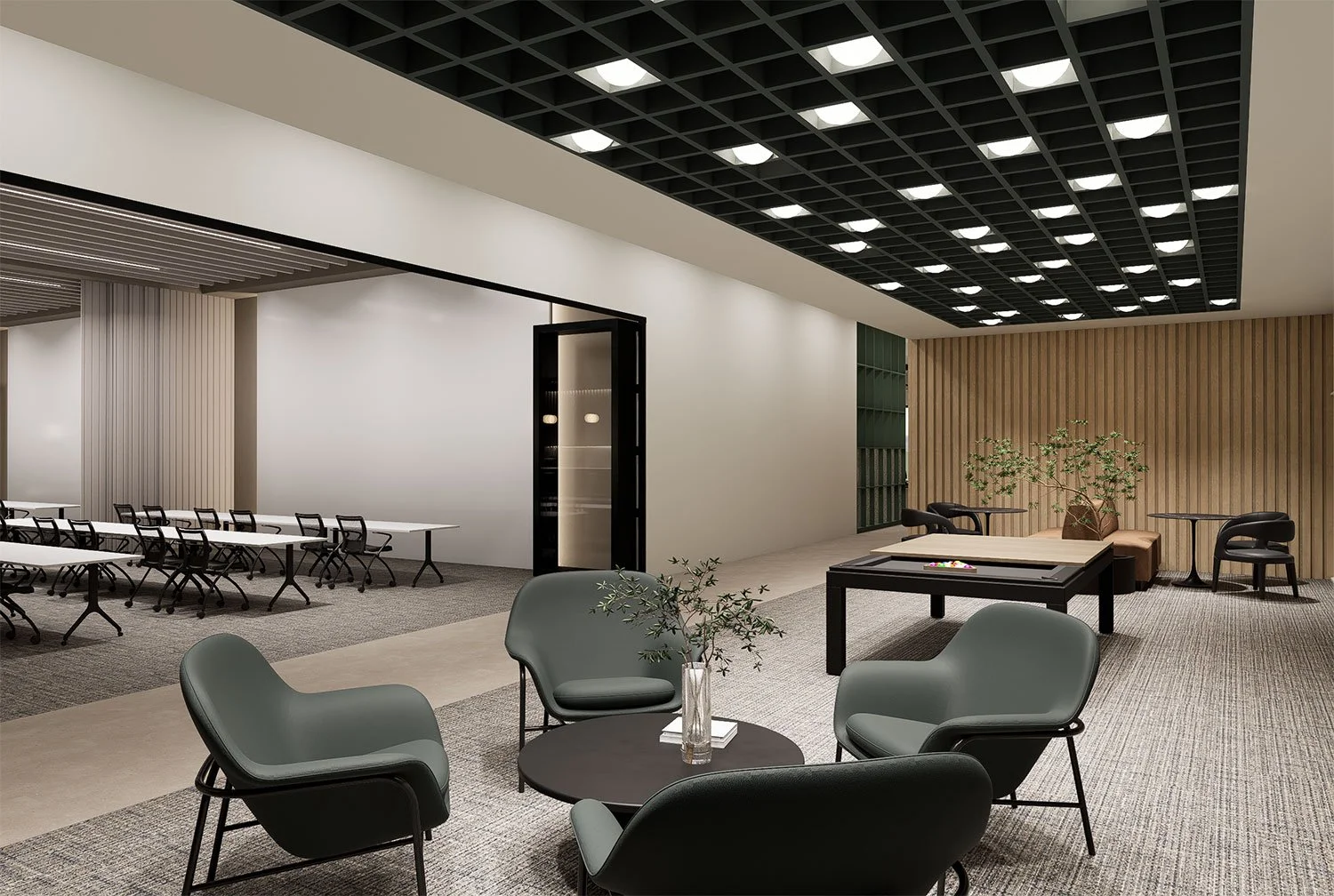
The solution isn't to go back to the 1990s cubicle farm. The solution is Spatial Sovereignty. A neuro-inclusive office is built as an "Ecosystem of Choice." We move away from static desk assignments and toward a layout that respects the "Sensory Spectrum." This involves three critical strategic zones:
1. High-Stimulation Collaborative Hubs
These are the "Social Anchors" of your office. Designed with vibrant textures, standing-height huddle spots, and intentional "buzz," these areas are for extroverted brainstorming and high-energy connection. By containing the "chaos" to specific zones, we protect the rest of the office.
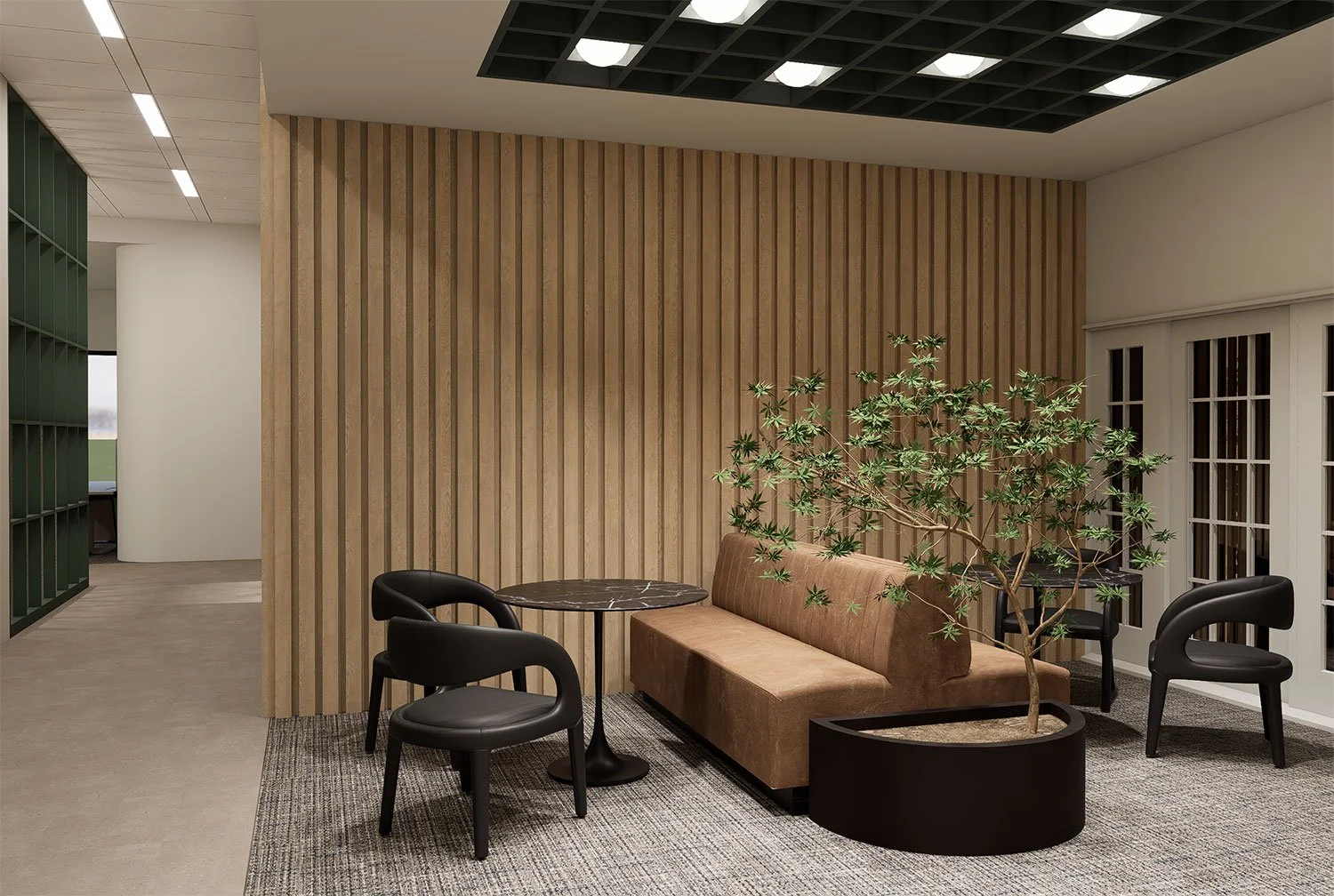
2. Transition Portals
One of the most overlooked aspects of office design is the "Sensory Handshake"—the physical space between a loud meeting room and a quiet focus zone. Maybeck Design utilizes "Transition Portals" (dimmer lighting, softer floor textures, and curved architectural lines) to help the brain downshift its state of arousal as it moves between tasks.
The "Founder’s ROI": Retention as a Revenue Stream
We often tell my clients: Retention is the new Recruitment. The cost of replacing a high-level team member in 2026—including lost knowledge, recruitment fees, and onboarding time—can exceed 200% of their annual salary. Neuro-inclusive design is your greatest retention tool.
When you provide a workspace where a dyslexic coder or an autistic architect feels "physically safe," you earn a level of loyalty that a salary bump cannot buy. You are telling them: "I value how your brain works enough to build a world that supports it."
The Maybeck Metric: We have found that by simply optimizing "Invisible Factors"—air quality, circadian lighting, and acoustic privacy—companies can see a 30% boost in overall team productivity and a 15% reduction in absenteeism.
Eco-Adaptive Meets Neuro-Inclusive
At Maybeck Design, we bridge the gap between "Sustainability" and "Humanity." Our Eco-Adaptive philosophy fits perfectly with neuro-inclusion.
Regenerative Biophilia: We don't just use plants for aesthetics. We use complex, oxygen-rich "Bio-filters" that naturally dampen sound and lower ambient CO2—which is a primary cause of afternoon cognitive decline.
Circadian Smart Lighting: We replace harsh, static lighting with AI-driven systems that mimic natural sunlight patterns. This stabilizes the "Sleep-Wake" cycle, which is often more fragile in neurodivergent individuals, leading to better focus during the day and better rest at night.
The 2026 Strategy: How to Start
As a business owner, you don’t need to knock down every wall tomorrow. You start with Spatial Intelligence.
Audit the "Sensory Gaps": Where are people actually working? If your expensive meeting rooms are empty but people are hiding in the breakroom to get work done, you have a sensory mismatch.
Prioritize "Invisible" Health: Before you buy a new sofa, invest in acoustic panels and lighting filters. Focus on what the brain feels, not what the eye sees.
Give Control Back: Invest in dimmable desk lamps, noise-canceling technology, and modular furniture. The more "Agency" an employee has over their micro-environment, the higher their output.
Conclusion: Designing for the 100%
When you design an office for the 20% who are neurodivergent, you actually end up designing a better office for the 100%. Everyone—neurotypical or not—benefits from better air, quieter focus spots, and the ability to choose how they work.
Maybeck Design is here to ensure your next commercial fit-out isn't just a physical change, but a strategic evolution. Let’s stop building offices that drain your people and start building environments that fuel them.
FAQ You Might Have
Q: What is the "Sensory Handshake" in office design?
A: The "Sensory Handshake" is a Maybeck Design term for the transitional physical zones that allow an employee’s nervous system to recalibrate. Instead of a door opening directly from a loud, high-traffic hallway into a quiet focus room, we design "decompression thresholds" using soft lighting and curved architecture. This prevents the "sensory shock" that often derails the focus of neurodivergent professionals when switching tasks.
Q: How does Maybeck Design measure "Cognitive Friction"?
A: Cognitive Friction refers to the invisible environmental factors that force the brain to work harder than necessary—such as poor light color rendering or "acoustic bleed" from open kitchens. We audit these friction points to quantify how much mental energy your team is wasting on filtering out their environment rather than solving business problems. Reducing this friction is the fastest way to increase team "bandwidth" without hiring more staff.
Q: Why is "Spatial Sovereignty" more effective than assigned seating?
A: Assigned seating assumes every employee’s brain functions the same way every day. Spatial Sovereignty, our core layout philosophy, gives employees the agency to match their environment to their current neurological state. Whether they need a "High-Stimulation Hub" for a collaborative sprint or a "Deep-Focus Nest" for complex coding, providing choice reduces burnout and empowers neurodivergent talent to manage their own productivity.
Q: Can neuro-inclusive design reduce commercial real estate costs?
A: es. By utilizing "Spatial Intelligence Auditing," we often find that CBOs are over-paying for square footage because their current layout is so inefficient that employees avoid it. By creating high-density "Nesting Zones" and multi-purpose "Transition Portals," we can often help clients move into smaller, higher-quality spaces that feel more expansive and functional than their previous, larger offices.
Q: How does "Circadian Alignment" impact the bottom line?
A: Light is a biological trigger. Most offices use static, blue-heavy lighting that disrupts the body’s natural cortisol and melatonin cycles, leading to "afternoon slump" and poor sleep quality. Our Neuro-Inclusive strategy uses strategic lighting that mimics the natural movement of the sun. This stabilizes energy levels across the team, resulting in sharper decision-making and a measurable decrease in mid-afternoon productivity dips.