
Why the Most Successful Commercial Buildings Start With the Facade
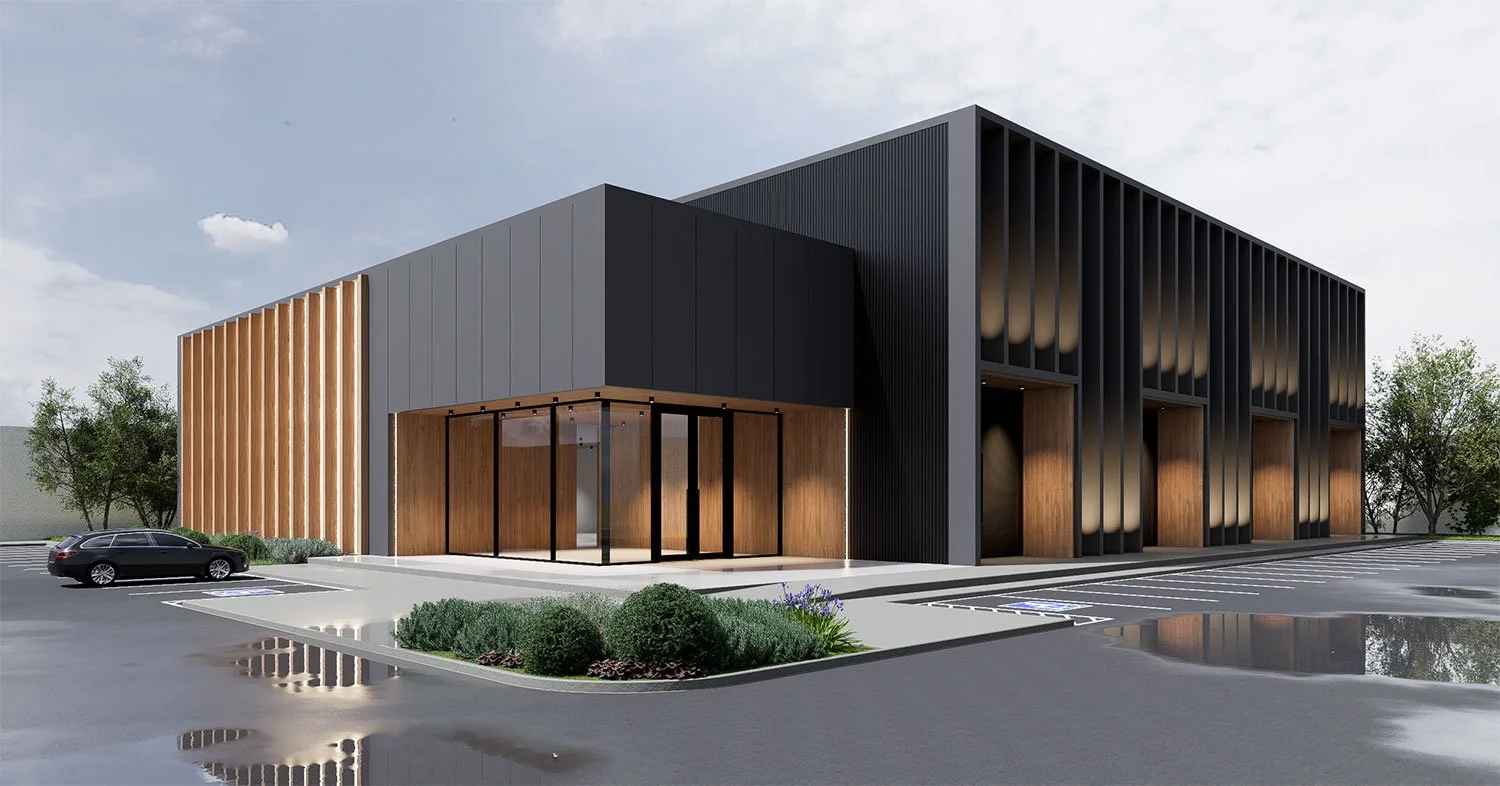
The First Five Seconds: A Story Every Business Is Telling
At 7:43 a.m., the city is already awake.
A café owner unlocks the door, delivery trucks rumble past, and a stream of people moves down the sidewalk—coffee in hand, eyes scanning, minds busy. In those first few seconds, before a word is spoken or a logo is read, something crucial happens.
A decision is made.
Someone slows their pace. Someone glances again. Someone walks in—or walks past.
This moment has nothing to do with your menu, your pricing, or even your reputation. It has everything to do with your facade.
In commercial design, we often obsess over what happens inside the space: layouts, materials, lighting, flow. But industrial design, when done right, understands a deeper truth—architecture and exterior design are not separate from interior design. They are the opening chapter of the same story.
Your building doesn’t just house your business. It introduces it.
Industrial Commercial Architecture Is Not a Style—It’s a Philosophy
Industrial design is often misunderstood as a purely aesthetic choice: exposed brick, steel beams, raw concrete, oversized windows. But at its core, industrial design is not about trends. It’s about honesty.
Honest materials. Honest structure. Honest function.
It originated in factories and warehouses—spaces built for efficiency, durability, and purpose. When industrial design meets architecture in commercial spaces, something powerful happens: form and function align to communicate strength, reliability, and clarity.
This philosophy extends beyond the interior walls. In fact, industrial design demands that the outside of your business tells the same truth as the inside.
A mismatch is instantly felt.
A bold, minimal interior hidden behind a neglected facade creates cognitive dissonance. Customers may not articulate it, but they feel it—and feeling always comes before logic.
Commercial Facade Design: Architecture, Psychology, and Brand
Your facade is not decoration. It is architecture performing psychology.
From an attention psychology standpoint, the human brain makes rapid judgments based on:
Shape and proportion
Material authenticity
Contrast and clarity
Perceived openness or defensiveness
Industrial architecture leverages these instincts.
Steel frames signal strength. Concrete communicates permanence. Large openings suggest transparency. Repetition and rhythm imply order and professionalism.
Before a customer knows what you sell, they subconsciously ask:
Is this place trustworthy?
Is it established?
Is it modern or outdated?
Does it feel intentional—or accidental?
Your facade answers every one of these questions in silence.
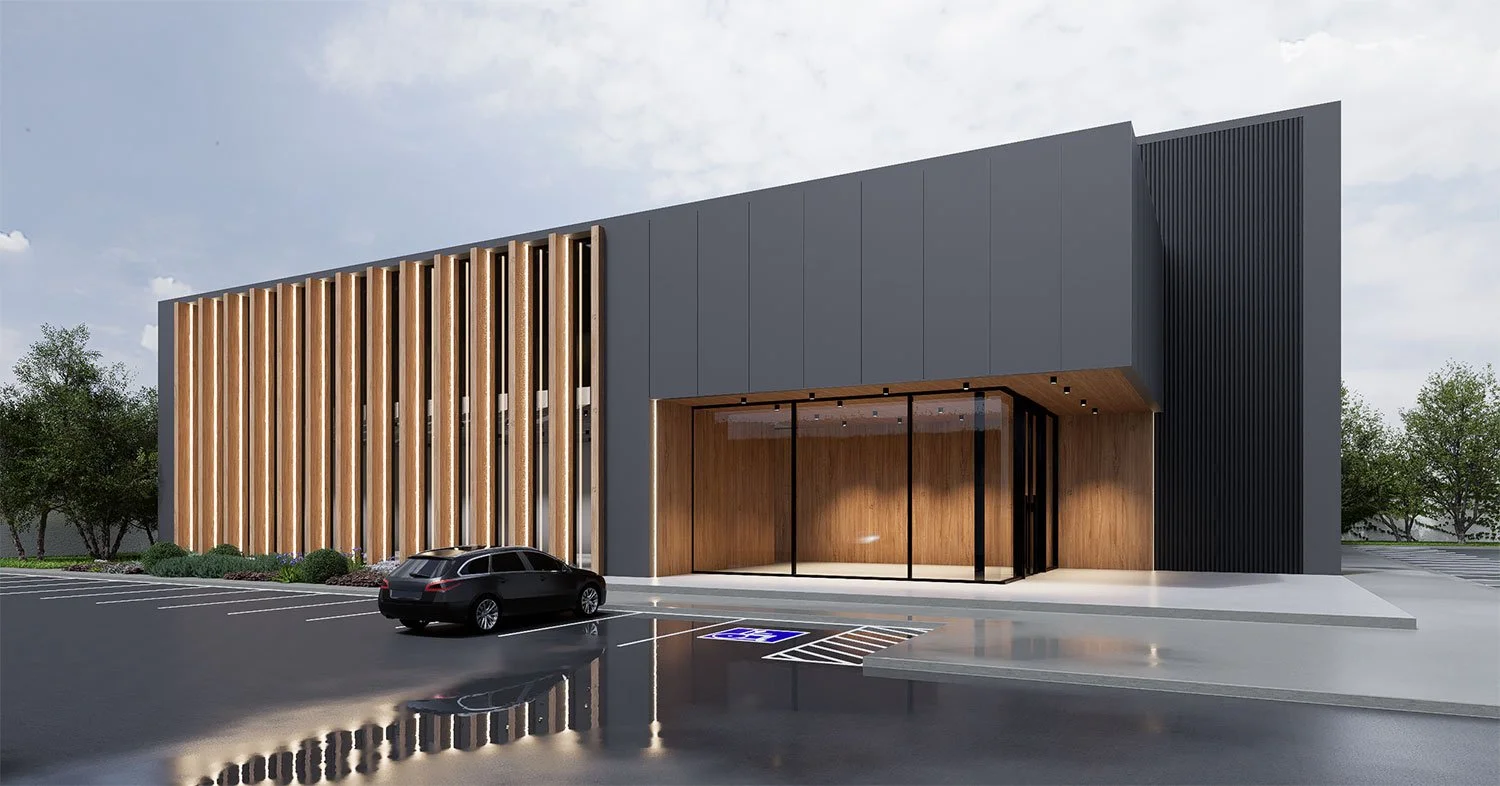
Architecture as a Filter, Not Just an Invitation
One of the most overlooked benefits of a strong industrial facade is selective attraction.
Great architecture doesn’t try to appeal to everyone. It attracts the right people.
Industrial design, especially in commercial spaces, sends a clear signal:
We value quality over excess
We prioritize substance over ornament
We are confident enough to be minimal
This is powerful in retail, hospitality, offices, and mixed-use commercial environments. Your exterior becomes a filter—welcoming those aligned with your brand values and gently discouraging those who aren’t.
This is not exclusion. It’s clarity.
The Outside-In Design Principle
In our approach to commercial interior design, we often work outside-in rather than inside-out.
Why?
Because the customer journey doesn’t start at the reception desk. It starts across the street.
Industrial architecture allows for a seamless narrative:
Urban Context – How the building speaks to its surroundings
Facade Composition – Materials, openings, signage integration
Threshold Experience – Doors, transitions, sensory shift
Interior Continuation – Where exterior cues are echoed inside
When these elements align, the experience feels effortless. When they don’t, friction appears—and friction kills engagement.
Material Storytelling: Why Raw Feels Real
Industrial design relies heavily on raw and semi-finished materials. This isn’t an aesthetic accident—it’s psychological.
Humans trust what looks real.
A concrete facade that shows its texture feels more authentic than one hidden behind synthetic cladding. Steel that ages gracefully tells a story of endurance. Brick that carries imperfections feels human.
From a branding perspective, these materials communicate:
Transparency
Durability
Confidence
And crucially, they age well.
A well-designed industrial facade doesn’t chase trends—it matures with them.
Signage Is Architecture, Not an Afterthought
One of the biggest mistakes in commercial exterior design is treating signage as a separate element.
In industrial architecture, signage should feel built-in, not applied.
This means:
Integrated steel lettering
Cut-out logos within concrete or metal panels
Lighting that enhances architecture, not overwhelms it
When signage becomes part of the facade, it strengthens brand recall and reduces visual noise. The building itself becomes the logo.
Lighting the Industrial Exterior: Drama with Purpose
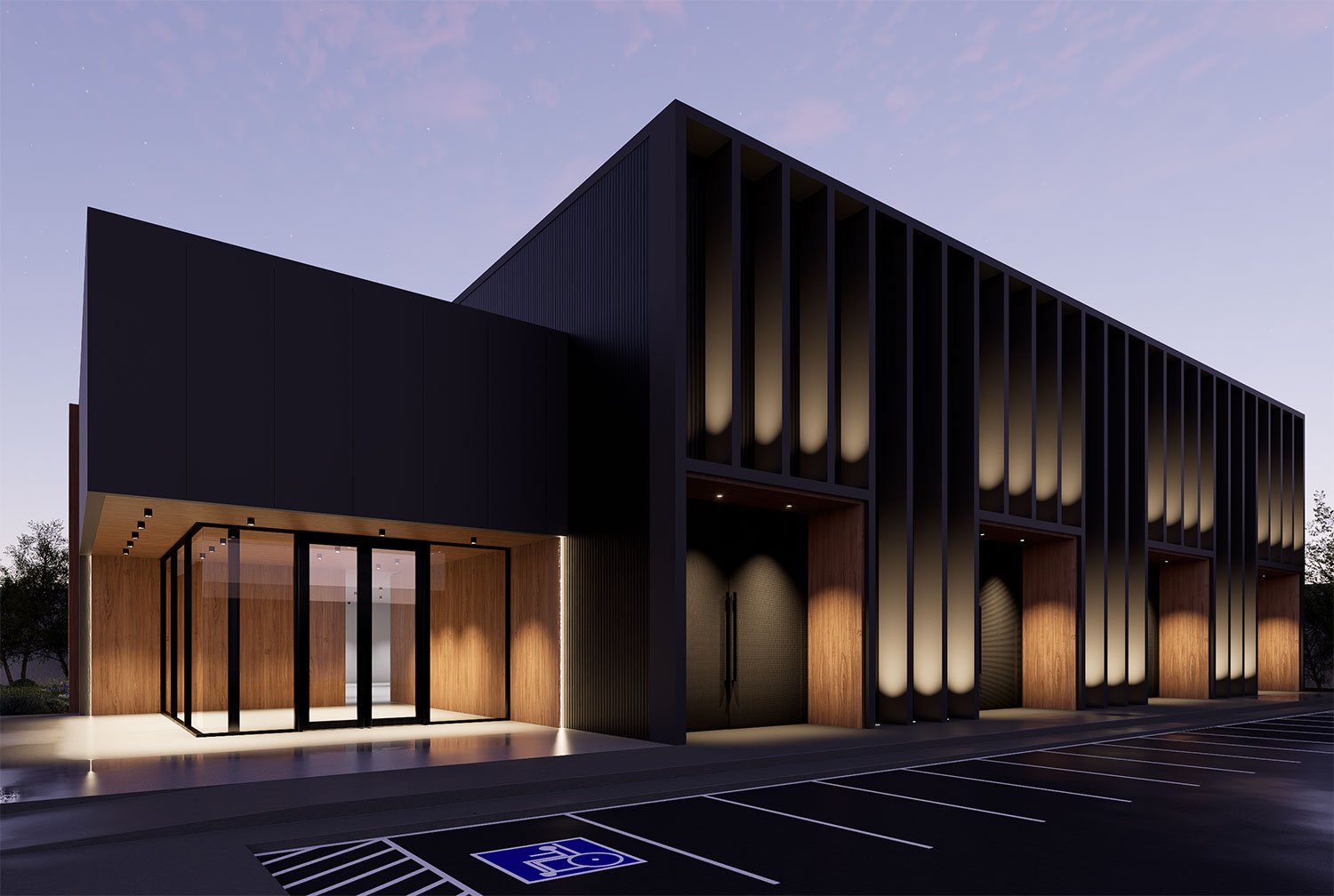
Industrial facades come alive at night.
Strategic exterior lighting:
Highlights texture
Creates depth and shadow
Signals activity and safety
Unlike decorative lighting, industrial lighting is intentional. It guides the eye, emphasizes structure, and extends the brand experience beyond daylight hours.
A well-lit facade doesn’t shout. It draws attention quietly.
Industrial Design Across High-Impact Commercial Sectors
Industrial design adapts powerfully across industries—but its strategic value shifts depending on business goals, regulations, and user experience demands. Here’s how architecture and facade design directly impact the commercial sectors we specialize in:
Multifamily Developments
In multifamily projects, the facade is a value multiplier.
Before leasing agents speak, the exterior communicates:
Long-term asset quality
Safety and durability
Lifestyle positioning
Industrial-inspired architecture—through durable materials, clear structural rhythm, and restrained detailing—signals permanence and investment intelligence. For residents, it creates pride of place. For owners and developers, it supports higher occupancy rates, stronger tenant retention, and brand differentiation in competitive markets.
Hospitality (Hotels, Restaurants, Cafés)
Hospitality is emotional—and the facade sets the mood.
Industrial architecture in hospitality environments conveys:
Authenticity over gimmicks
Atmosphere before the first step inside
Confidence in experience, not decoration
A well-designed exterior becomes part of the guest journey: photographed, remembered, shared. It draws foot traffic, reinforces concept identity, and ensures the interior experience feels intentional rather than overdesigned.
Office Environments
Office buildings are no longer just workplaces—they are recruitment tools, brand statements, and trust signals.
An industrial architectural approach communicates:
Stability and professionalism
Innovation without trend-chasing
Transparency and operational clarity
For business owners and tenants alike, the facade shapes perception for clients, employees, and investors long before meetings begin.
Healthcare Facilities
In healthcare, trust begins outside.
Industrial design—when softened with thoughtful proportions, light, and material balance—creates exteriors that feel:
Solid and dependable
Calm rather than intimidating
Modern without feeling cold
Architecture here must balance regulatory requirements with emotional reassurance. A clear, well-composed facade reduces anxiety, improves wayfinding, and reinforces credibility—critical factors for healthcare operators and patients alike.
The Cost of Ignoring Your Exterior
Many businesses see facade design as optional.
It’s not.
A weak exterior:
Reduces walk-in traffic
Lowers perceived value
Creates disconnect between brand promise and experience
Forces marketing to work harder than it should
Your building should be your most efficient marketing tool.
It works 24/7. It never needs ad spend. It never stops communicating.
Designing for Longevity, Not Likes
Trends fade. Architecture stays.
Industrial design rooted in architectural logic—proportion, material honesty, structural clarity—outlasts visual fads. It supports business growth, brand evolution, and changing interior needs without requiring constant reinvention.
This is especially critical for commercial spaces where redesigns are expensive and disruptive.
Your Facade Is the Promise. Your Interior Is the Proof.
The most successful commercial spaces understand this balance.
The facade makes a promise. The interior fulfills it.
When industrial design and architecture work together—from the street to the smallest interior detail—you don’t just attract customers.
You build trust before the first interaction.
And in today’s competitive commercial landscape, trust is the most valuable currency of all.
Our Approach
We design commercial environments with a clear understanding that every architectural decision carries financial, operational, and brand consequences.
Our approach integrates:
Architecture and interior design as one continuous system
Facade-first thinking to maximize first impressions, visibility, and trust
Industrial design principles that prioritize durability, clarity, and long-term value
Business strategy alignment, ensuring design supports leasing, occupancy, customer experience, and brand positioning
This perspective is built for owners, operators, and developers who view their buildings as assets—not just spaces.
Ready to Think Outside First?
If you’re evaluating a new development, renovation, repositioning, or rebranding, the conversation shouldn’t begin with finishes or furniture.
It should start outside—with architecture, facade strategy, and the story your building tells before anyone walks in.
Explore how this thinking applies across our work:
Multifamily exterior design → See how architecture supports long-term asset value and resident appeal
Hospitality projects → View environments where exterior identity drives foot traffic and experience
Office building architecture & healthcare facility design → Discover spaces built on trust, clarity, and performance
When architecture, industrial design, and business goals align, your building becomes a competitive advantage—not an expense.