
The Anticipation Curve: Why the Guest Journey Fails or Flies in the Hotel Corridor
In high-end hospitality development, budgets are a battlefield. When allocating capital for a new build or a comprehensive property renovation, the instinct of the C-suite is almost always identical: pour the vast majority of the interior investment directly into the guestrooms. Developers agonize over the thread count of the linens, the marble selection in the en-suite bathrooms, and the layout of the bespoke bedside tech.
But this hyper-focus on the destination overlooks a critical psychological phase of the guest journey.
The truth is, the guest experience doesn't begin when they swipe their keycard and open the hotel room door. It begins the moment they step off the elevator.
One of the most systematically overlooked opportunities in modern hospitality design is the hotel corridor and the room entry experience. While guestrooms receive the lion's share of attention and funding, the physical journey down the hallway is where anticipation is actively cultivated and first impressions are permanently sealed.
The Psychology of the Transition Zone
When a guest arrives at a boutique or luxury hotel, their entry into the lobby is high-energy, vibrant, and visually stimulating. But once they check in and ascend to their floor, they enter a transitional phase. They are transitioning from the public realm of the hotel to the private sanctuary of their room.
If that transition occurs in a long, uninspired, institutional hallway lit by harsh overhead fixtures and lined with identical doors, the premium brand illusion shatters. The hallway becomes a tunnel to navigate rather than an extension of the luxury experience.
At Maybeck Design, we treat the corridor as an architectural narrative. It should act as a decompression chamber—a sensory buffer that intentionally lowers the guest’s heart rate, builds a sense of quiet anticipation, and signals that they have entered an exclusive, protected space.
Designing the Arrival: Breaking the "Endless Tunnel" Effect
The primary enemy of excellent corridor design is monotony. Linear, unzoned hallways feel endless, cold, and inherently institutional. To counteract this, our studio implements three core spatial interventions:
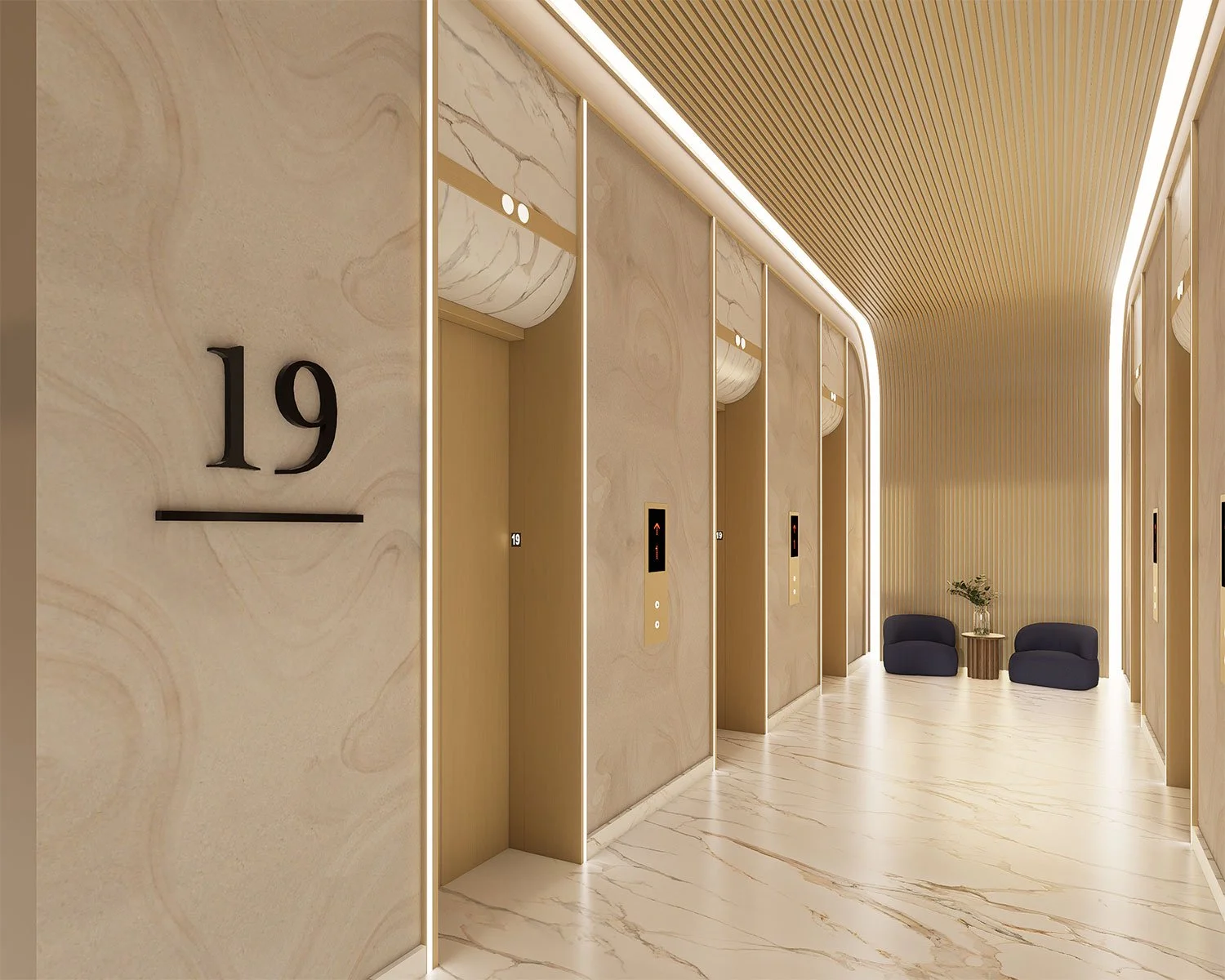
The Elevator Bank Reveal: The moment the elevator doors open, the guest should be met with an immediate, high-impact design anchor. This lobby-ette should establish the floor's distinct identity through a focal art installation, a signature statement light fixture, or a deep, rich color palette that instantly sets the mood.
Compression and Expansion Metrics: To eliminate the tunnel effect, we utilize architectural framing elements down the length of the hallway. By introducing rhythmic ceiling drops, alternating wall treatments, and structural portals, we break a monolithic corridor into a series of intimate, digestible spatial moments.
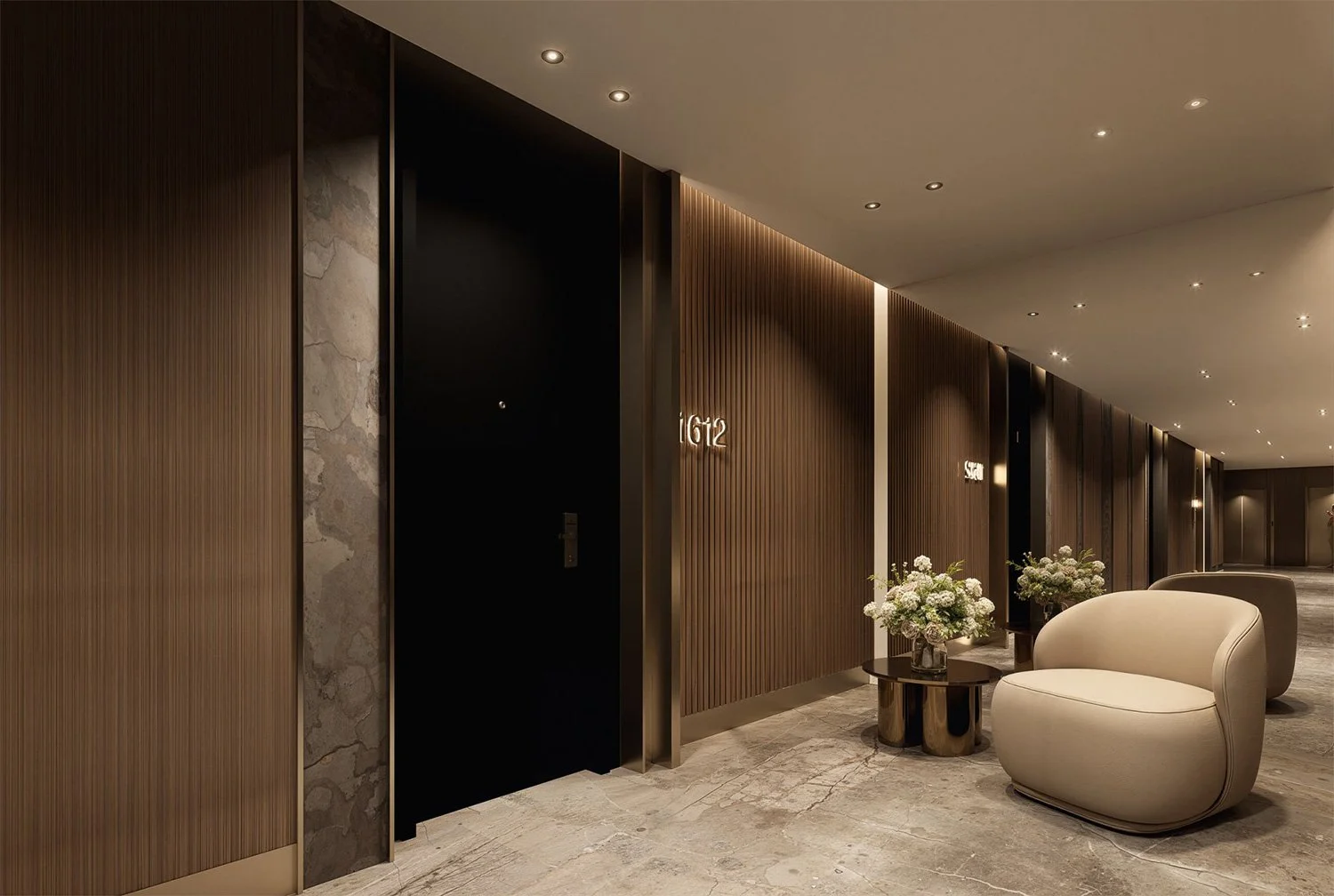
The Threshold Handshake: The room entry shouldn't be a flat door on a flat wall. We recess room entries to create deep, private vestibules. Sinking the door back from the main traffic flow creates a micro-porch for the guest, instantly providing a feeling of residential safety and personal ownership before they even turn the handle.
Layering the Elements: Lighting, Sound, and Texture
Transforming a corridor from a utility hallway into an experiential pathway requires a hyper-disciplined approach to sensory materiality:
Sculptural, Low-Level Lighting: The easiest way to ruin a hotel hallway is with uniform, glaring downlights. We replace them with layered, indirect lighting schemes—such as soft wall sconces, concealed baseboard glow lines, and directional spotlights that illuminate the room numbers while keeping the center of the path moody and relaxing.
Acoustic Subtraction: Hallways are notoriously prone to carrying noise from rolling luggage and late-night foot traffic. We specify high-pile, acoustic-backed woven flooring or custom-patterned runners paired with dense, upholstered wall paneling or textured plaster finishes to systematically trap and kill sound waves, ensuring absolute tranquility for the rooms nearby.
The Tactile Handshake: The hardware matters. The weight, material, and grip of the corridor room doors—down to the specific patina of the heavy brass or matte black handle—serve as the physical manifestation of the hotel’s quality metrics. It should feel substantive, deliberate, and premium.
The Strategic ROI of the Elevated Hallway
Investing in your corridors isn’t just an aesthetic flourish; it is an aggressive asset defense strategy. From an economic standpoint, the corridor is a massive percentage of a hotel’s total interior square footage. Leaving it unprogrammed and under-designed is a waste of high-value real estate.
When developers partner with Maybeck Design to elevate the journey to the room, they unlock distinct operational advantages:
Dramatically Higher Initial Satisfaction: Guests form an sub-conscious baseline opinion of their room before they ever step inside it. A high-end corridor primes the guest to perceive the guestroom itself as more luxurious, driving up overall satisfaction scores.
Amplified Word-of-Mouth and Content Capture: Modern travelers actively document their journeys. A beautifully lit, highly textured, dramatic hotel corridor functions as a prime backdrop for social content, generating free, organic brand marketing for the property.
Sustainable Durability: Corridors take incredible operational abuse from housekeeping carts and heavy luggage. By utilizing high-end, heavily vetted commercial finishes that mimic residential luxury, we ensure the corridor retains its premium identity for years without requiring continuous patch-and-paint maintenance.
Conclusion: Elevate the Journey
True luxury is never accidental. It is found in the meticulous curation of the spaces most people forget to look at. If you want your hospitality asset to stand completely alone in a crowded market, stop treating your corridors as mere paths from point A to point B. Treat them as the vital built narrative they are.
Maybeck Design is here to help you capitalize on the hidden corners of your property. Let’s connect to talk about refining the complete arrival experience of your next hospitality development.
FAQ You Might Have
Q: Why is hotel corridor design important for the guest experience?
A: The corridor serves as the critical transition zone between the high-energy public areas of a hotel and the private guestrooms. An intentionally detailed corridor acts as a decompression chamber, building positive anticipation and setting the premium tone for the room interior before the guest ever steps inside.
Q: How do you fix the long "tunnel effect" in a hotel hallway?
A: Designers break the monotony by introducing compression and expansion metrics. This includes creating rhythmic ceiling drops, alternating wall materials, utilizing recessed room portals, and breaking up the visual distance with distinct lighting zones and localized artwork.
Q: What lighting strategies work best for hospitality hallways?
A: Avoid uniform overhead fluorescent or intense LED downlighting. The best hospitality corridors utilize layered, indirect illumination—such as custom wall sconces, integrated low-level baseboard lighting, and directional wall washes that highlight doors and numbers while keeping the main walkway calm and glare-free.
Q: How do you handle acoustic management in commercial corridors?
A: To silence the noise of footsteps and rolling luggage, designers combine high-density, acoustic-backed carpeting or custom runners with sound-absorbing wall applications, such as heavy wallcovering vinyls, fabric panels, or specialized textured plaster.
Q: Does upgrading corridor design take away from the guestroom budget?
A: No, it is a strategic balancing act. By focusing on smart lighting placements, deep-set doorway entries, and durable, high-impact finishes at key touchpoints (like the elevator bank and room portals), a property can achieve a high-end feel without over-inflating the overarching construction budget.