
The Hospitality Paradigm: Why Experience-Driven Spaces Rule Every Asset Class
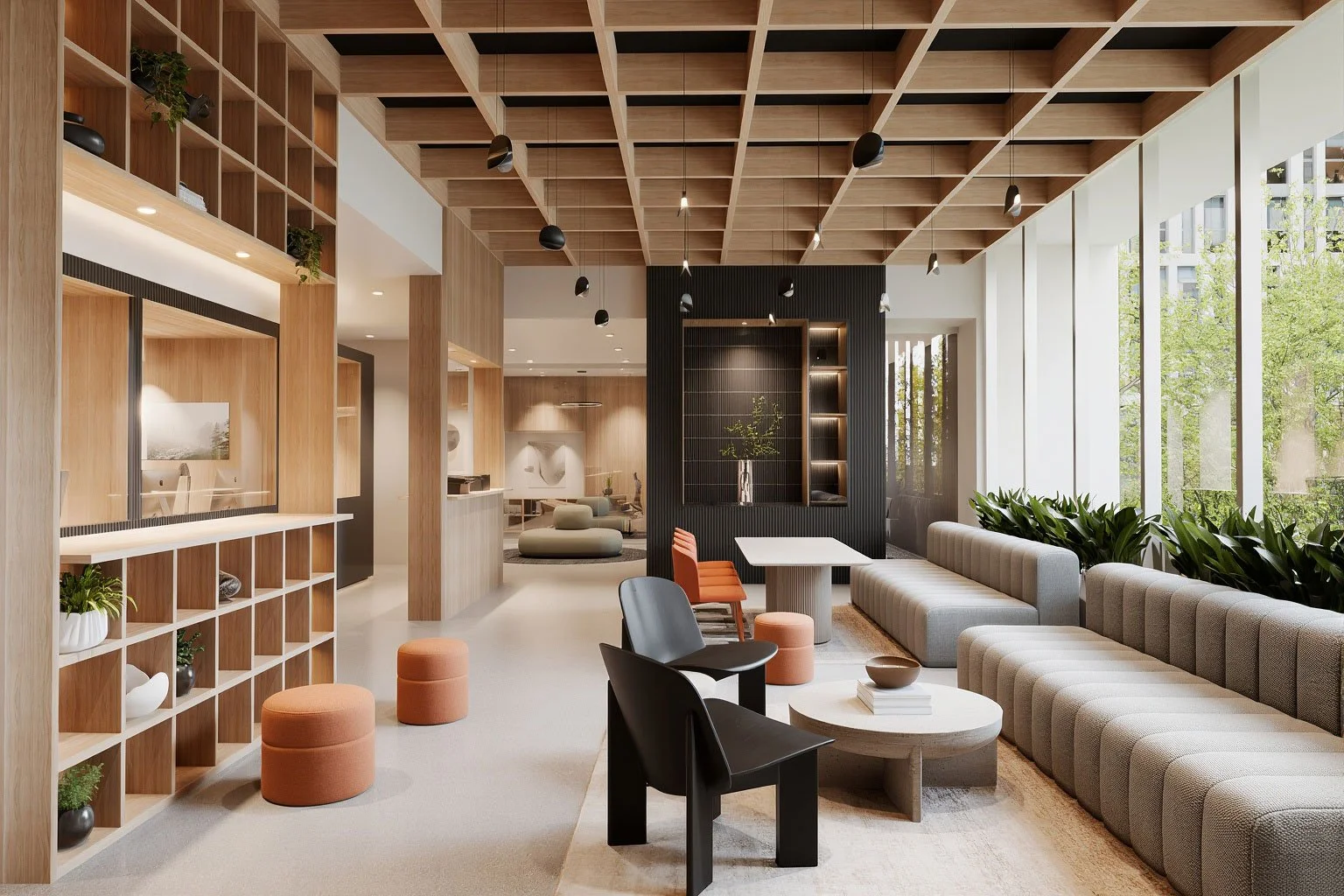
For decades, commercial real estate operated within strict, independent silos. Corporate offices were engineered for sheer utility. Healthcare spaces were draped in sterile, clinical finishes. Senior living environments focused purely on functional care, while multifamily developments treated common areas as transactional check-boxes.
But as we navigate 2026, those boundaries have completely dissolved.
At Maybeck Design, we are witnessing a massive cultural and economic shift: Hospitality is no longer a market sector—it is an expectation. Whether an individual is walking into an ambulatory care center, a corporate headquarters, a luxury apartment complex, or a senior living community, they are no longer comparing that space to its immediate competitor. They are comparing it to their favorite boutique hotel.
For Commercial Business Owners (CBOs) and asset managers, this evolution is a major differentiator. Design is no longer just about filling a structural footprint; it is about engineering a responsive, welcoming, and experience-driven environment that directly shapes human behavior and safeguards asset valuation.
The Cross-Industry Shift: De-Siloing the Real Estate Landscape
The modern user—whether an employee, a patient, or a resident—seeks psychological comfort, intuitive navigation, and sensory alignment. When you infuse traditional commercial environments with a hospitality-driven ethos, you fundamentally alter how users interact with the brand.
Here is how the hospitality mindset is actively restructuring four major asset classes:
1. The Experiential Office: From Mandate to Magnet
In the hybrid-work environment, forcing teams back to a sterile, uninspiring office fails to spark productivity. The corporate headquarters must transition from a place of obligation to a destination of choice. By blending hospitality design with spatial sovereignty, we create workplaces that feature concierge-style arrival sequences, variable acoustic lounges, and wellness spaces that mirror high-end day spas. The result? Spikes in collaboration, deeper corporate loyalty, and a distinct recruiting edge.
2. Humanized Healthcare: De-Escalating Clinical Anxiety
Historically, medical spaces relied on cold, institutional aesthetics that actively triggered patient stress. True hospitality-driven healthcare design replaces clinical intimidation with warmth. By replacing harsh overhead fluorescent grids with soft, indirect lighting, introducing sound-absorptive organic finishes, and organizing intuitive layout flows, we eliminate environmental friction. When patients feel cared for by the architecture itself, clinical anxiety drops and patient satisfaction scores rise.
3. Progressive Senior Living: Honoring Autonomy with Dignity
The incoming generation of senior living residents rejects the institutional, clinical models of the past. They demand dynamic spaces that celebrate community, lifestyle, and vitality. Our studio approaches senior living by designing high-end culinary spaces, light-flooded community hubs, and textured boutique lounges. We integrate vital medical accessibility invisibly behind artisanal wood paneling and sophisticated finishes, allowing residents to retain complete autonomy and dignity without sacrificing clinical support.
4. Multifamily Dynamics: Cultivating Community Assets
As rental markets face continuous supply additions, generic finishes are no longer enough to support premium rates. A hospitality approach transforms multifamily properties into cohesive lifestyle ecosystems. By replacing static common areas with dynamic "Social Anchors"—such as espresso bars that shift into evening lounges or beautifully lit wellness corridors—we turn tenants into active members of an exclusive community, which heavily accelerates leasing velocity.
The Economics of Comfort: Why the Hospitality Pivot Protects Yield
Leading with a hospitality strategy is a calculated asset protection mechanism. Environments that feel cold or purely transactional create high user turnover and structural vacancy. Conversely, spaces that prioritize the human sensory experience generate profound emotional attachment.
At Maybeck Design, our cross-sector design philosophy focuses on maximizing this psychological premium. When an environment feels welcoming and effortless, it directly alters key financial metrics:
Extended Retention: Residents stay longer, employee churn decreases, and patient acquisition costs stabilize.
Premium Positioning: Experience-driven buildings consistently command higher lease rates and valuations compared to neighboring institutional assets.
Operational Resilience: High-touch, hospitality-grade materials are structurally engineered for heavy commercial durability while retaining an elevated, residential aesthetic.
The Maybeck Hospitality Blueprint
We translate luxury hotel principles across diverse asset classes by focusing on three distinct spatial laws:
The Sensory Handshake: Evaluating every physical touchpoint—from door hardware weights to the texture of common-area surfaces—to communicate immediate, high-value intent.
Circadian Light Architecture: Utilizing layered, programmable illumination that shifts naturally throughout the day, creating an evolving mood that reduces fatigue and fosters calm.
Frictionless Spatial Flow: Organizing layouts intuitively so users can move naturally through a building without experiencing confusing bottlenecks or directional frustration.
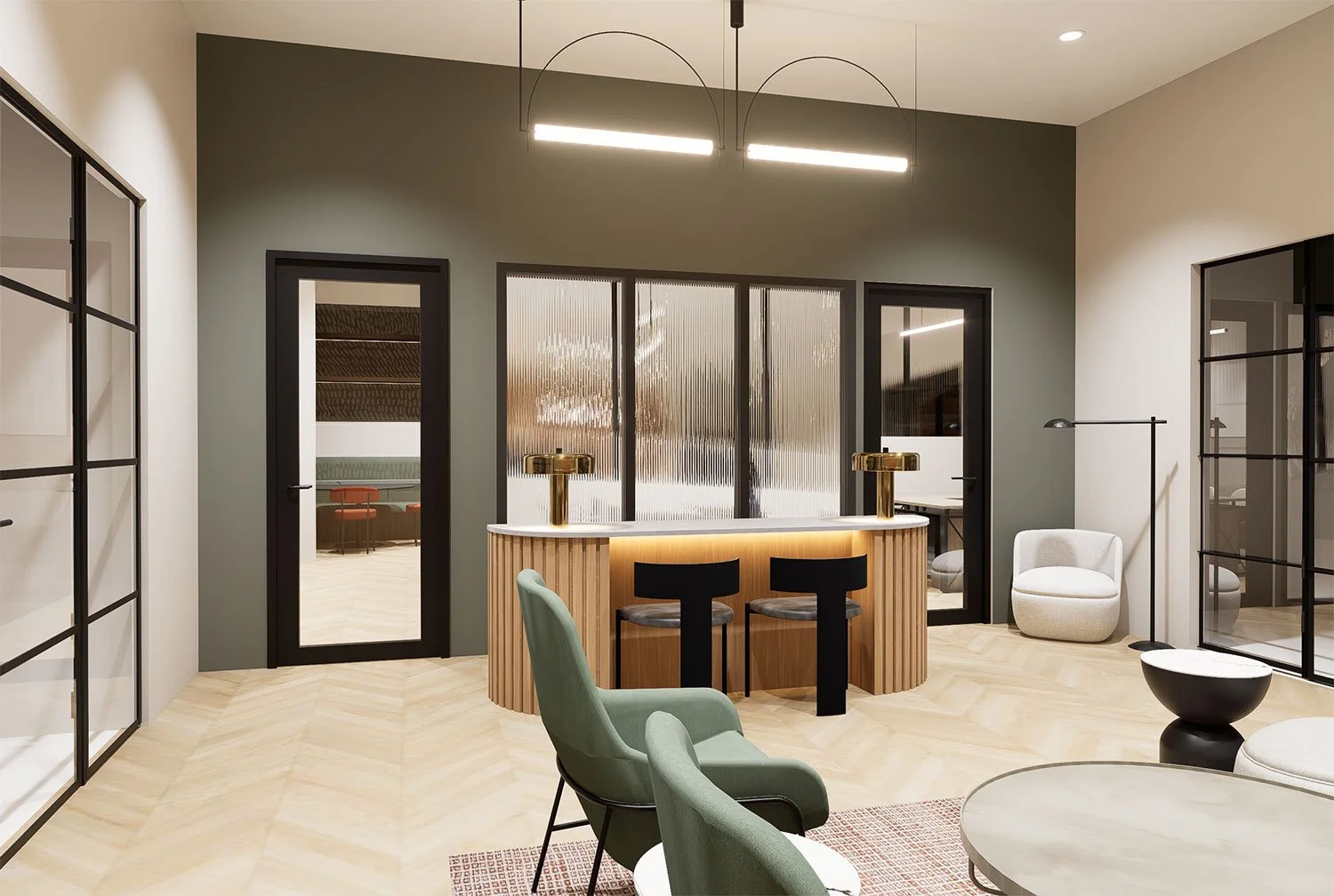
Conclusion: Designing the Unforgettable
In 2026, an asset cannot afford to be average. No matter your industry, your physical environment acts as the living embodiment of your values and your commitment to the people inside it.
Maybeck Design bridges the gap between high-level real estate strategy and human-centric design. Let’s collaborate to infuse a world-class hospitality mindset into your next development project.

FAQ You Might Have
Q: What does hospitality-driven design mean outside of hotels?
A: It refers to integrating hotel-level principles—such as sensory materiality, customized lighting, intuitive navigation, and a focus on comfort—into traditional sectors like office spaces, healthcare centers, and senior living communities to enhance the user experience.
Q: How does hospitality design improve healthcare spaces?
A: By swapping institutional, sterile layouts for calming elements like concealed medical equipment, natural wood tones, organic textures, and indirect ambient lighting, design helps lower a patient's stress levels and improves their overall care experience.
Q: Why are corporate offices adopting hotel strategies?
A: To attract teams back to physical spaces, workplaces must offer an experience that regular homes cannot match. Hospitality-driven offices feature collaborative lounges, wellness amenities, and premium touchpoints that foster cultural engagement and reduce everyday stress.
Q: What defines modern hospitality design in senior living?
A: Modern senior living design moves completely away from institutional nursing home layouts. It emphasizes boutique-style common areas, refined restaurant-caliber dining facilities, and vibrant social spaces that treat accessibility as an integrated, invisible design feature.
Q: Does hospitality-driven design require a larger budget?
A: Not necessarily. It is a strategic prioritization of the budget. By focusing capital on highly visible user touchpoints, smart lighting layers, and spatial planning, a design team can create a luxury boutique feel without escalating core construction costs.