
Why Branding Is the Missing Piece in Your Commercial Interior Design Project

You've invested in premium finishes. You've hired talented architects. Your commercial space looks polished, professional, and impressive. But something still feels off — visitors can't quite pin down what your business stands for the moment they walk in the door. The problem isn't the interior design. The problem is that branding was never part of the conversation.
For commercial property owners, developers, and business leaders, this disconnect is more common than you'd think — and more costly than most realize. The spaces we occupy send signals long before a single word is spoken. When those signals contradict your brand, you're actively working against the business you're trying to build.
This guide breaks down why branding and commercial interior design must be treated as a unified discipline, what happens when they're not, and how forward-thinking businesses are using integrated brand environments to command higher rents, attract premium tenants, strengthen client trust, and build lasting competitive advantage.
What "Branding" Actually Means in a Commercial Space
Branding is not a logo on the wall. It's not a color palette applied to your reception desk. And it's certainly not a last-minute decision made after construction is already underway.
In the context of commercial interior design, branding is the deliberate alignment of every spatial element — layout, materiality, lighting, wayfinding, typography, color, even scent and sound — with the values, personality, and promise of your organization. It's the answer to a simple but profound question: what do you want people to feel the moment they enter this space?
A law firm that wants to project authority and discretion will communicate something completely different through its interiors than a tech startup optimizing for innovation and collaboration. A luxury retail brand entering a new flagship market must tell a consistent visual story that its customers already associate with quality and aspiration. A mixed-use development needs to attract and retain a specific tenant mix — and the brand environment it creates determines who shows up and who stays.
Your space is your brand's most permanent and expensive marketing channel. Every square foot is either working for you or against you. This is what brand-integrated interior design delivers: spaces that don't just look good, but mean something — spaces that communicate clearly, attract the right people, and reinforce your competitive position every single day.
The Real Cost of Disconnected Branding and Design
Many commercial projects are developed in silos. A brand agency develops visual identity assets. An interior design firm specifies the space. A contractor builds it. The result is a space that may be beautiful in isolation, but functionally incoherent as a brand experience.
Here's what that disconnect costs you in practice.
Confused first impressions are the most immediate damage. Prospects and clients can't form a clear mental picture of who you are, and ambiguity kills trust before the conversation even starts. For developers and landlords, a generic commercial environment makes it significantly harder to attract premium tenants who want a space that reflects their own brand positioning. In competitive markets, undifferentiated spaces compete on price alone — and that's a race to the bottom.
Internally, workplaces that don't reflect company culture produce lower employee satisfaction, higher turnover, and reduced productivity. All of those carry measurable financial costs that most organizations never trace back to their built environment.
Then there's the retrofit problem. Retrofitting brand elements after build-out is significantly more expensive than integrating them from the start. Late-stage brand alignment typically adds 15 to 40 percent to the project budget — money that could have been avoided entirely with the right process from day one.
How Brand-Integrated Interior Design Works in Practice
The most effective commercial spaces are developed through what we call a brand-first design process. Rather than treating the brand as a skin applied over a finished interior, it becomes the foundation from which every design decision flows.
Brand discovery before design brief. Before a single floorplan is sketched, a thorough brand discovery process establishes the core principles that will govern spatial decisions. This means clarifying your brand's positioning, target audience, core values, visual language, tone of voice, and competitive differentiators. For commercial developers, this also means identifying the tenant profile you're trying to attract and designing the environment to appeal directly to their brand expectations.
Translating brand values into spatial language. Every brand attribute has a spatial equivalent. Transparency might manifest as open-plan layouts and glass partitioning. Heritage and authority might call for rich material choices like solid timber, stone, and brass detailing. Innovation might demand flexible, modular environments with bold typographic installations and integrated digital media. The role of a brand-integrated design team is to translate abstract values into specific, tangible decisions about space, material, light, and form.
Consistent touchpoint design. Branding in commercial interiors operates through every touchpoint a visitor, tenant, or customer encounters: the building entrance, reception experience, wayfinding systems, meeting room environments, amenity spaces, signage, environmental graphics, digital integrations, and even the service interactions that happen within the space. Each of these is an opportunity to reinforce — or undermine — your brand promise.
Longevity and flexibility. A well-branded commercial interior is a strategic investment. Brand-aligned design decisions tend to be more durable because they're rooted in purpose rather than trend. They create frameworks that can evolve gracefully as your brand grows, rather than becoming dated the moment the next design cycle arrives.
Who This Matters Most For
Commercial office developers and landlords. In a market where tenant expectations have fundamentally shifted, brand-integrated commercial environments are one of the most powerful tools for differentiation. Tenants are no longer willing to accept generic space. They're choosing buildings that reflect their own brand ambitions and that offer environments their people actually want to inhabit. Developers who build with brand integration as a core deliverable are commanding rental premiums and achieving faster occupancy. Those who don't are discounting.
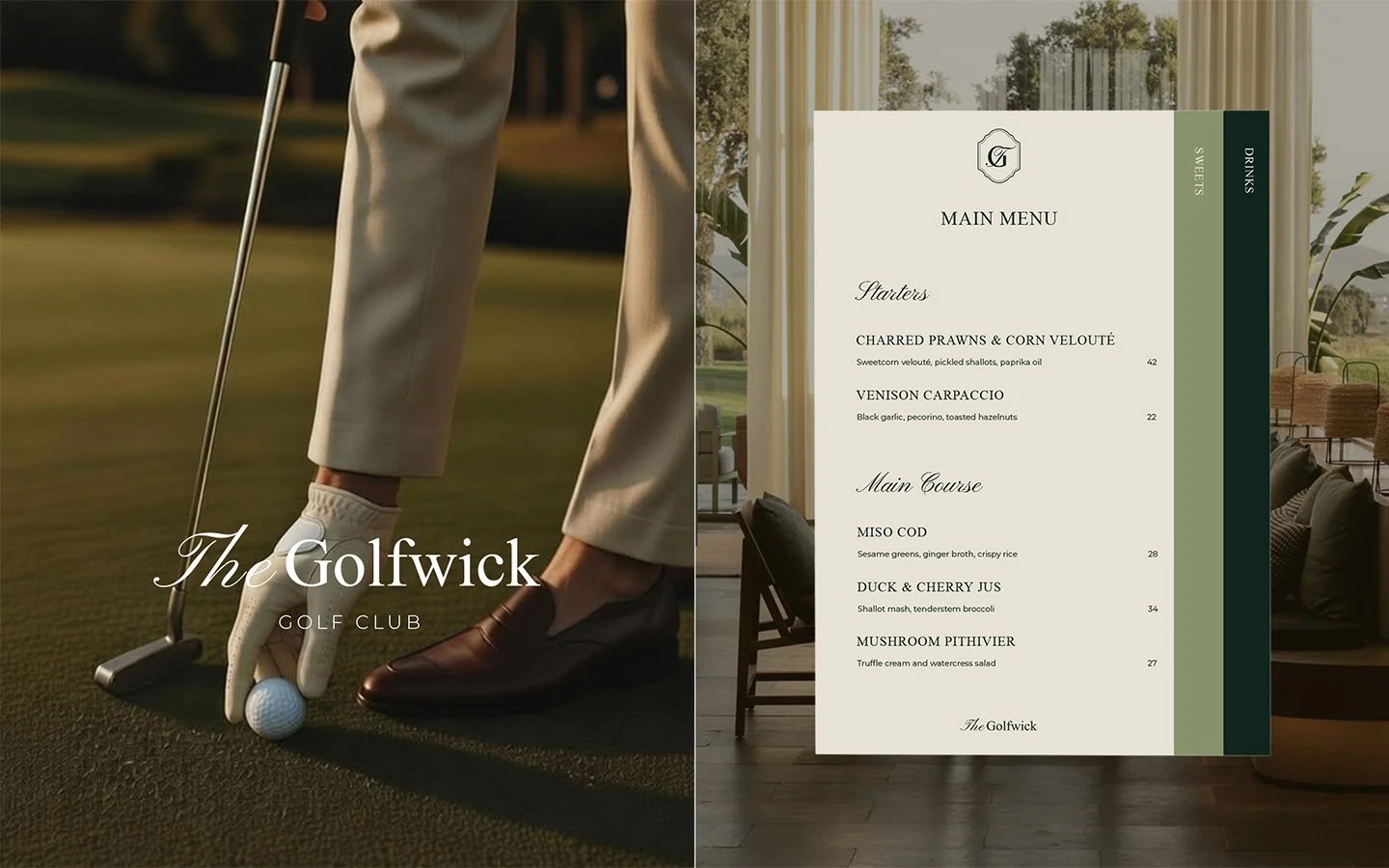
Retail and hospitality operators. For retail brands, restaurants, hotels, and experiential concepts, the interior environment is the product. Customers make purchasing decisions based on how a space makes them feel. Brand-integrated interiors for these operators are not a luxury — they're the primary driver of customer acquisition, spend-per-visit, and loyalty.
Corporate headquarters and professional services. For law firms, financial institutions, consultancies, and healthcare organizations, the office environment is a critical trust-building tool. High-value clients form judgments about competence, stability, and caliber based in large part on the physical environment in which they're received. A brand-aligned headquarters signals that the organization is deliberate, professional, and successful — before a single credential is presented.
Mixed-use and real estate developers. Large-scale mixed-use projects present one of the most complex branding challenges in the built environment. When done well, a coherent brand environment transforms a collection of buildings into a destination with genuine place identity. That identity drives footfall, media coverage, premium positioning, and long-term asset value that generic developments simply cannot match. The developments that become landmarks aren't the ones with the biggest budgets — they're the ones with the clearest identity.
What to Look for in a Design Partner Who Offers Branding
Not every interior design firm offers genuine brand integration. Some will tell you they do — and then hand you a color palette. Genuine brand-integrated design requires a team with capabilities across strategic brand thinking, spatial design, environmental graphics, material specification, and project delivery.
The right partner starts with brand discovery, not floor plans. They can articulate the strategic rationale behind every major design decision — not just the aesthetic one. They have a proven portfolio across multiple commercial sectors and they collaborate directly with your marketing, communications, and leadership teams. Most importantly, they think about your space as a business asset, not just an aesthetic outcome.
The right partner doesn't just make your space look good. They make your space work — generating return on investment through stronger tenant attraction, higher client conversion, better employee retention, and more powerful brand positioning in your market.

Conclusion: Your Space Is a Strategic Asset
Every commercial interior project is an opportunity to build something that does more than house your business. It's an opportunity to communicate who you are with a clarity and conviction that no website, brochure, or social media channel can match.
The businesses and developers who understand this — who treat brand integration as a foundational element of every project rather than a cosmetic afterthought — are the ones building spaces that endure, appreciate in value, and consistently outperform their competition.
Branding and interior design are not two separate services. In the most successful commercial projects, they are one and the same discipline. The sooner that principle guides your next project, the sooner your space begins returning real, measurable value.
FAQ You Might Have
Q: What is the difference between interior design and branding in a commercial space?
A: Interior design focuses on the functional and aesthetic arrangement of a physical space — layout, materials, furniture, lighting, and finishes. Branding, in the context of commercial interiors, is the strategic layer that ensures all of those design decisions communicate a consistent identity, values, and message to everyone who enters. Interior design answers the question "how does this space look and function?" Branding answers the question "what does this space say about who we are?" The most successful commercial projects don't treat these as separate disciplines — they integrate them from the very beginning so that form and meaning reinforce each other at every level.
Q: How does branding in a commercial interior affect property value and rental rates?
A: Brand-integrated commercial environments consistently outperform generic spaces in both asset value and rental performance. When a building or development has a clear, compelling identity — expressed through its architecture, interiors, amenities, and spatial experience — it becomes easier to market, faster to lease, and more defensible on pricing. Premium tenants are willing to pay above-market rents for spaces that align with their own brand image and that offer environments their employees and clients respond to positively. For real estate developers, investing in brand integration at the design stage is one of the highest-return decisions available, as it directly influences lease-up velocity, tenant quality, and long-term asset positioning.
Q: When in a commercial design project should branding be introduced?
A: Branding should be introduced before the design brief is finalized — ideally at the very beginning of the project, during the strategic planning and programming phase. This allows brand values, target audience profiles, and identity direction to inform fundamental spatial decisions: building layout, circulation flow, material palette, and the hierarchy of spaces. Introducing branding after construction is underway forces compromise. Retrofitting brand elements after build-out is not only more expensive — typically adding 15 to 40 percent to costs — but it also produces results that feel applied rather than authentic, because the brand is being layered over decisions that were made without it.
Q: Can branding services be integrated into a commercial interior design project, or do they require a separate agency?
A: Increasingly, the most effective approach is to work with a single design partner who has genuine capability in both disciplines. When branding and interior design are handled by separate agencies working in parallel, the result is often a coordination gap — brand assets are developed in isolation from spatial realities, and design decisions are made without strategic brand direction. A firm that integrates both services operates from a unified brief, ensures consistency across every touchpoint, and eliminates the costly rework that typically results from misalignment between the two workstreams. It also creates a faster, more coherent process for the client, with fewer stakeholders to manage and a clearer line of accountability for the overall outcome.
Q: What industries benefit most from brand-integrated commercial interior design?
A: While virtually every commercial sector benefits from aligning its physical environment with its brand, the industries where the impact is most direct and measurable include hospitality, retail, professional services, corporate real estate, and mixed-use development. In hospitality and retail, the interior experience is inseparable from the product itself — it directly influences customer perception, spend, and loyalty. In professional services such as law, finance, and consulting, a brand-aligned workspace signals credibility and caliber to high-value clients. In commercial real estate and mixed-use development, a strong brand environment differentiates the asset, attracts premium tenants, and creates the kind of place identity that drives long-term value. In every case, the underlying principle is the same: spaces that communicate with intention outperform spaces that don't.